
Cambridge IGCSE Biology, topic 16
Reproduction
Reproduction is how living organisms produce new individuals of their own kind. This topic covers asexual and sexual reproduction, sexual reproduction in flowering plants and in humans, the sex hormones, and sexually transmitted infections. It also covers how flowers are pollinated, how seeds germinate, and how the fetus develops in the uterus.
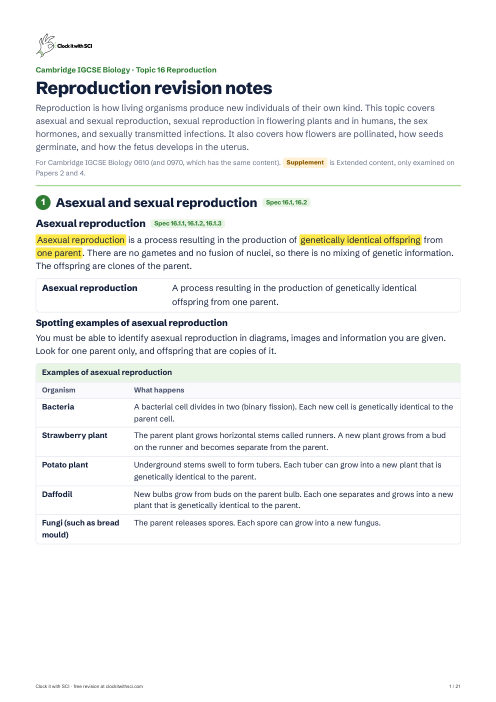 Revision notes
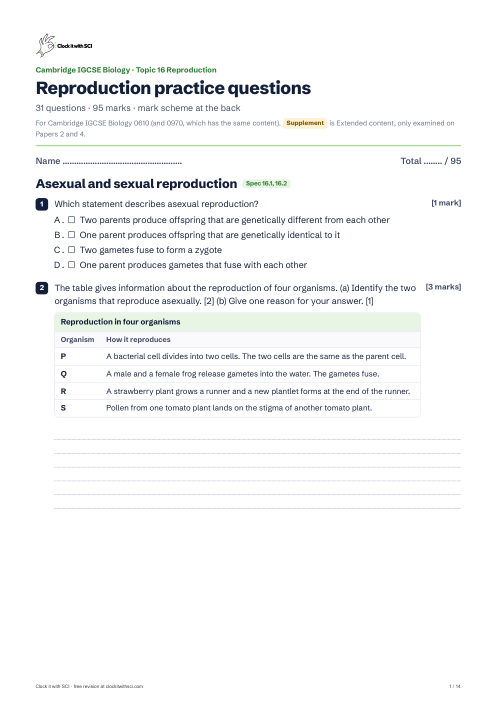 Worksheet
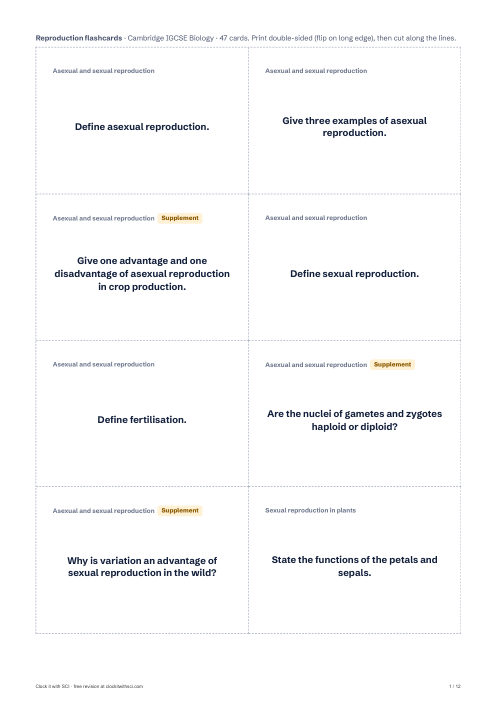 Flashcards
Subtopics
Work through them in order. Each one has notes, exam questions and flashcards, and a PDF of each.
- 1Asexual and sexual reproduction Spec 16.1, 16.2Asexual reproduction gives genetically identical offspring from one parent; sexual reproduction fuses gamete nuclei and gives varied offspring.NotesQuestions 6Flashcards 7
- 2Sexual reproduction in plants Spec 16.3Flower structure and function, insect and wind pollination, pollination and fertilisation, self and cross-pollination, and germination.NotesQuestions 7Flashcards 15
- 3Sexual reproduction in humans Spec 16.4The male and female reproductive systems, sperm and egg cells, fertilisation, implantation, and the fetus, placenta and umbilical cord.NotesQuestions 7Flashcards 14
- 4Sex hormones in humans Spec 16.5Testosterone and oestrogen in puberty, the menstrual cycle, and how FSH, LH, oestrogen and progesterone control the cycle and pregnancy.NotesQuestions 6Flashcards 7
- 5Sexually transmitted infections Spec 16.6What an STI is, HIV and AIDS, how HIV is transmitted, and how the spread of STIs is controlled.NotesQuestions 5Flashcards 4
Whole topic
When you have done the subtopics: test yourself on everything, or print the lot.