
The breathing systemSpec B11.1.1
In short
Air passes through the larynx, trachea, bronchi and bronchioles to the alveoli in the lungs; ribs, intercostal muscles and the diaphragm move the thorax.
Air enters the body through the nose or mouth and travels to the lungs along a series of tubes. The lungs sit inside the thorax (chest), protected by the ribs. The diaphragm forms the floor of the thorax.
- Air passes through the larynx (voice box) into the trachea (windpipe).
- The trachea divides into two bronchi (singular: bronchus), one to each lung.
- Each bronchus branches into many smaller tubes called bronchioles.
- The bronchioles end in tiny air sacs called alveoli (singular: alveolus).
- Each alveolus is surrounded by a network of capillaries, where gas exchange happens.
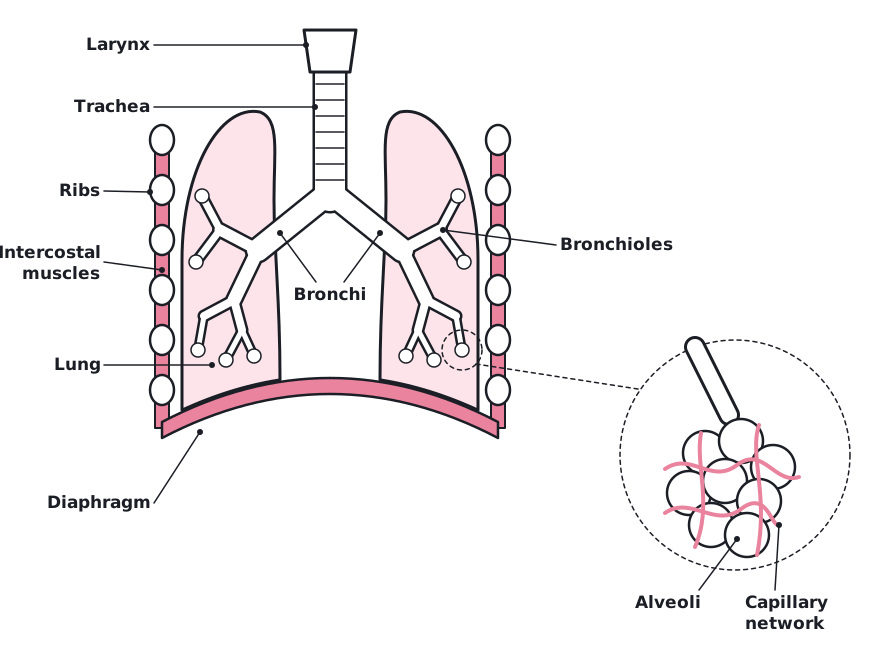 (opens full size in a new tab)
| Part | Description or function |
|---|---|
| Lungs | Organs in the thorax where gas exchange takes place |
| Ribs | Bones that protect the lungs and move to change the volume of the thorax |
| Intercostal muscles | Muscles between the ribs that move the ribs |
| Diaphragm | Sheet of muscle below the lungs that separates the thorax from the abdomen |
| Larynx | Voice box at the top of the trachea |
| Trachea | Windpipe: carries air to the bronchi |
| Bronchi | Two tubes that carry air into the lungs |
| Bronchioles | Small tubes that carry air to the alveoli |
| Alveoli | Air sacs where oxygen and carbon dioxide are exchanged with the blood in the capillaries |
Exam tip:
Spell bronchi (plural, two tubes) and bronchioles (the small tubes) carefully. They are often mixed up, and the mark is lost if the wrong one is written.
Written and checked against the Cambridge IGCSE Combined Science (0653) specification · Updated October 2026