
Arteries, veins and capillariesSpec B9.3.1, B9.3.2
In short
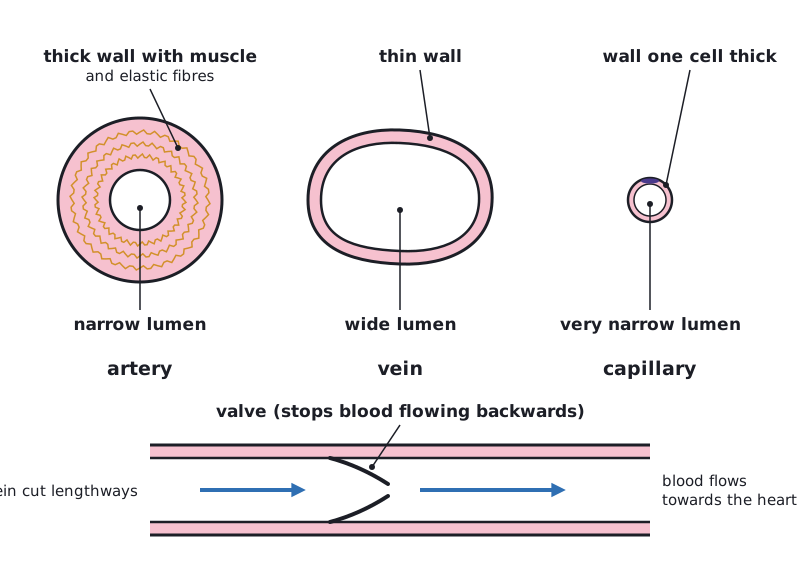
Arteries have thick walls for high pressure, veins have thin walls and valves, and capillaries are one cell thick for exchange of substances.
| Vessel | Wall | Lumen | Valves |
|---|---|---|---|
| Artery | Thick | Narrow | No |
| Vein | Thin | Wide | Yes |
| Capillary | One cell thick | Very narrow | No |
 (opens full size in a new tab)
Supplement (what this means)
Supplement: only for the Extended papers (2 and 4). Core students can skip it. What the labels meanStructure related to pressure
Supplement (what this means)
Supplement: only for the Extended papers (2 and 4). Core students can skip it. What the labels mean- Arteries carry blood away from the heart at high pressure. Their thick walls, containing muscle and elastic fibres, withstand the pressure and stretch and recoil with each beat. The narrow lumen helps to maintain the pressure.
- Veins carry blood back to the heart at low pressure. They need only thin walls, and the wide lumen gives little resistance to flow. Valves stop the blood flowing backwards.
Supplement (what this means)
Supplement: only for the Extended papers (2 and 4). Core students can skip it. What the labels meanExam tip:
Do not say that veins have 'no muscle'. Say their walls are thinner because the blood is at lower pressure.
Quick check
Which blood vessels have valves?
Show answer
Veins.
Supplement Why do arteries have thick walls?
Show answer
They carry blood at high pressure, so the walls must withstand it.
Written and checked against the Cambridge IGCSE Combined Science (0653) specification · Updated October 2026