
Components of bloodSpec B9.4.1, B9.4.2, B9.4.3
In short
Blood is made of red blood cells, white blood cells, platelets and plasma. Red blood cells have no nucleus and contain haemoglobin, which combines with oxygen to transport it. White blood cells defend against pathogens by phagocytosis and antibody production. Platelets help blood to clot, and plasma transports cells, ions, nutrients, urea, hormones and carbon dioxide.
Blood is made of red blood cells, white blood cells, platelets and plasma. Plasma is the liquid part.
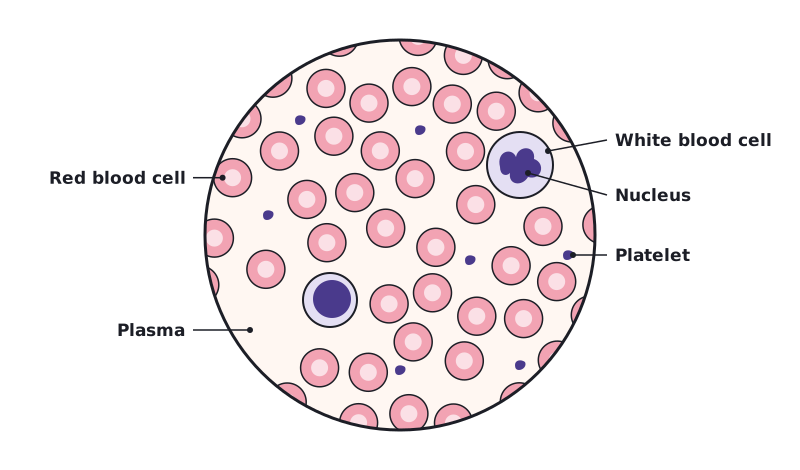 (opens full size in a new tab)
- Red blood cells are small, round and pale in the middle, with no nucleus.
- White blood cells are larger and have a nucleus, usually stained dark.
- Platelets are tiny fragments of cells.
| Component | Function |
|---|---|
| Red blood cells | Transport oxygen. They contain the red pigment haemoglobin, which combines with oxygen |
| White blood cells | Defend against pathogens by phagocytosis and antibody production |
| Platelets | Help blood to clot |
| Plasma | Transports blood cells, ions, nutrients, urea, hormones and carbon dioxide |
Exam tip:
Name the pigment. 'Red blood cells carry oxygen' is not enough: say the oxygen is carried by haemoglobin. Clotting details are not required for platelets.
Written and checked against the Cambridge IGCSE Combined Science (0653) specification · Updated October 2026