
Specialised cellsSpec B2.1.6
In short
A specialised cell has a shape and contents suited to one function, such as root hair cells for absorption and red blood cells for oxygen transport.
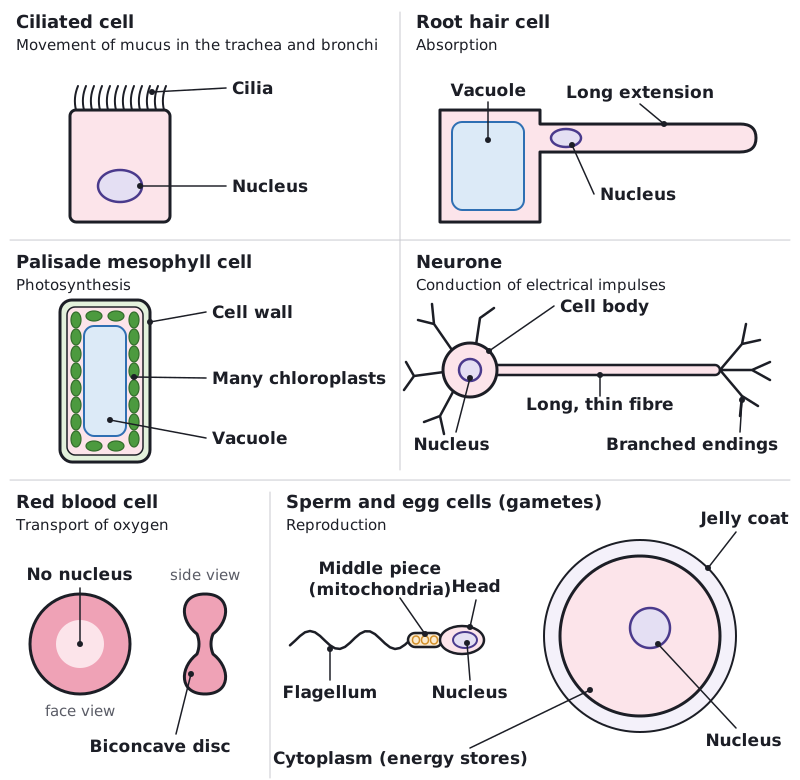
In many organisms, cells become specialised. A specialised cell has a specific function. Its shape and contents are suited to doing that job.
| Cell | Function | Feature that helps |
|---|---|---|
| Root hair cell | Absorption | Long extension gives a large surface area for uptake of water and mineral ions |
| Palisade mesophyll cell | Photosynthesis | Contains many chloroplasts |
| Red blood cell | Transport of oxygen | Contains haemoglobin, which carries oxygen |
 (opens full size in a new tab)
Exam tip:
You need three specialised cells and their functions: root hair cells for absorption, palisade mesophyll cells for photosynthesis and red blood cells for the transport of oxygen. The diagram also shows cells that Combined Science does not ask about.
Written and checked against the Cambridge IGCSE Combined Science (0653) specification · Updated October 2026