
Insect- and wind-pollinated flowersSpec B14.1.6
In short
Insect-pollinated flowers have bright petals, nectar and sticky pollen; wind-pollinated flowers have small petals, light pollen and feathery stigmas.
Flowers are adapted to be pollinated either by insects or by wind. Their structures differ in ways you can see and describe.
Wind-pollinated flowers
In a wind-pollinated flower, such as a grass, the anthers hang outside the flower on long filaments, where the wind can blow the pollen away. The stigmas are large and feathery and also hang outside the flower, to catch pollen grains carried in the air.
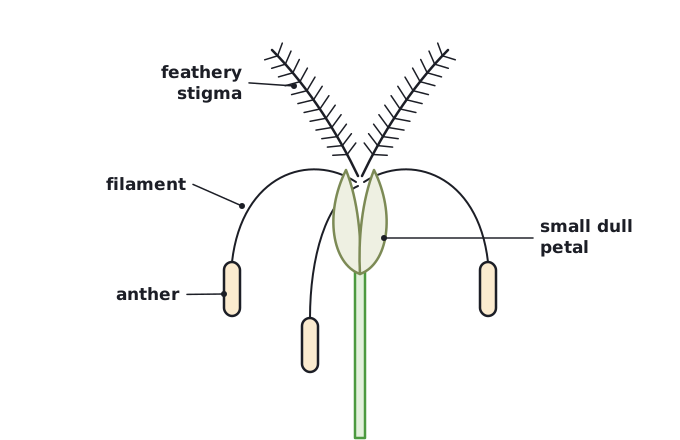 (opens full size in a new tab)
Always link a feature to its job. 'Feathery stigma' scores less than 'feathery stigma gives a large surface area to catch pollen from the wind'.
Written and checked against the Cambridge IGCSE Combined Science (0653) specification · Updated October 2026