
Turgor, flaccid cells and plasmolysisSpec B3.2.5
In short
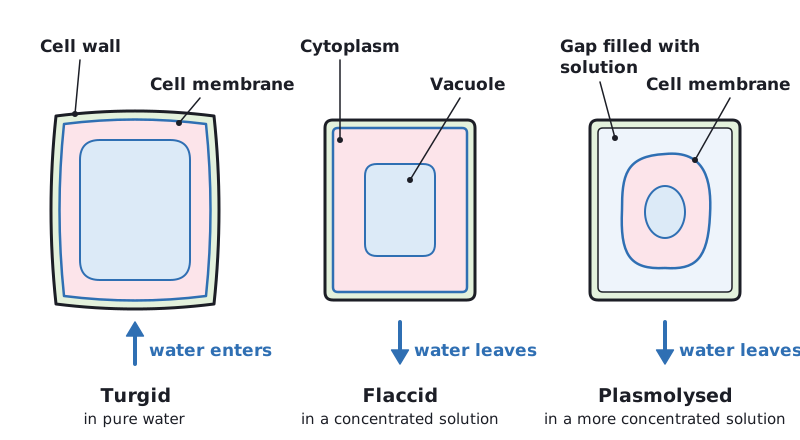
A turgid plant cell has gained water by osmosis, so its vacuole presses the cell contents against the cell wall; this pressure is turgor pressure. In a concentrated solution, water leaves and the cell becomes flaccid. If more water leaves, the cytoplasm shrinks and the cell membrane pulls away from the cell wall, which is plasmolysis.
Plant cells have a strong cell wall outside the cell membrane. This changes what happens to them in different solutions.
| Solution compared with the cell | Movement of water | Result |
|---|---|---|
| Higher water potential (dilute; for example pure water) | Water enters the cell by osmosis | The vacuole swells and presses the cell contents against the cell wall. The cell becomes turgid. The turgor pressure is the pressure of the cell contents on the cell wall. The wall stops the cell bursting. |
| Same water potential | No net movement of water | The cell neither gains nor loses water, so it does not change. |
| Lower water potential (concentrated) | Water leaves the cell by osmosis | The cell loses turgor pressure and becomes flaccid. If more water leaves, the cytoplasm shrinks and the cell membrane pulls away from the cell wall. This is plasmolysis. |
Turgid cells keep a plant upright and leaves held out to catch light. When cells lose water and become flaccid, the plant wilts.
Use all four terms where asked: turgid (full of water, firm), turgor pressure (pushes on the wall), flaccid (soft, turgor pressure lost), plasmolysis (membrane pulled away from wall).
Plant cells do not burst in pure water because the cell wall resists the pressure. Animal cells have no wall, so they can burst.
 (opens full size in a new tab)
Quick check
What is moved by osmosis?
Show answer
Water, through a partially permeable membrane.
Supplement Define osmosis using water potential.
Show answer
The net movement of water molecules from a region of higher water potential (dilute solution) to a region of lower water potential (concentrated solution), through a partially permeable membrane.
Supplement What is plasmolysis?
Show answer
The cell membrane and cytoplasm pulling away from the cell wall because water has left the cell by osmosis.
Written and checked against the Cambridge IGCSE Combined Science (0653) specification · Updated October 2026