
CommunitiesSpec 4.7.1.1
In short
An ecosystem is the interaction of a community of living organisms (biotic) with the non-living (abiotic) parts of their environment. A population is all the organisms of one species in an area, and a community is all the populations of different species there. Plants compete for light, space, water and mineral ions; animals compete for food, mates and territory.
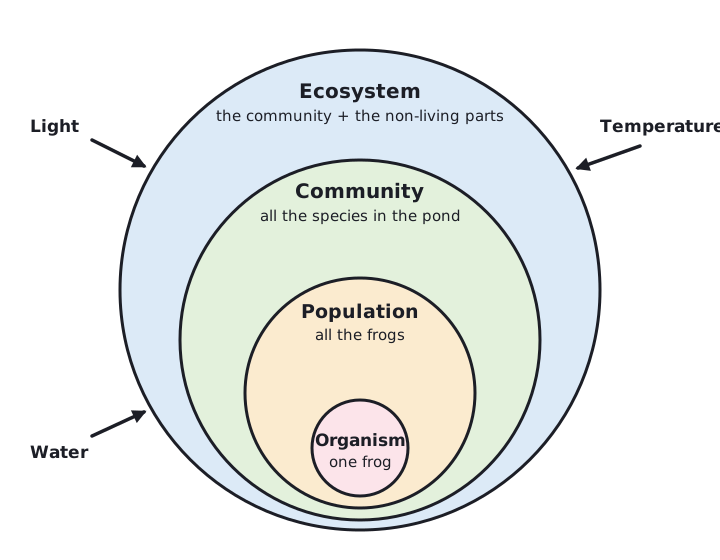
An ecosystem is the interaction of a community of living organisms (biotic) with the non-living (abiotic) parts of their environment.
Levels of organisation
| Level | What it means | Pond example |
|---|---|---|
| Individual organism | One living thing | One frog |
| Population | All the organisms of one species living in the same area | All the frogs in the pond |
| Community | All the populations of the different species living in the same area | All the plants, animals and microorganisms in the pond |
| Ecosystem | The community together with the non-living parts of the environment | The pond community plus the water, light and temperature |
 (opens full size in a new tab)
To survive and reproduce, organisms need a supply of materials from their surroundings and from the other living organisms there.
Competition
Organisms in a community or habitat compete for the things they need when these are in short supply.
| Organisms | They often compete for |
|---|---|
| Plants | Light, space, water and mineral ions from the soil |
| Animals | Food, mates and territory |
You may be given a habitat and asked what organisms compete for. Match it to the table: trees in a wood compete for light, so a plant under them is short of light.
Interdependence and stable communities
- Interdependence
- Within a community each species depends on other species for food, shelter, pollination, seed dispersal and so on. If one species is removed it can affect the whole community.
- Stable community
- A community where all the species and environmental factors are in balance so that population sizes remain fairly constant.
For example, if a plant species that is pollinated by one type of insect is removed, that insect loses its food, and the animals that eat the insect lose theirs. One change spreads through the community.
You may need to extract and interpret information from charts, graphs and tables about how organisms in a community affect each other. Describe the pattern first, then explain it using food, competition or predation.
Written and checked against the AQA GCSE Combined Science (8464) specification · Updated October 2026