
Cells, tissues, organs and organ systemsSpec 4.2.1
In short
A tissue is a group of cells with a similar structure and function, an organ is an aggregation of tissues performing specific functions, and organs are organised into organ systems. The stomach is an organ: muscular tissue churns food, glandular tissue makes digestive juices and epithelial tissue covers its surfaces. It is part of the digestive system.
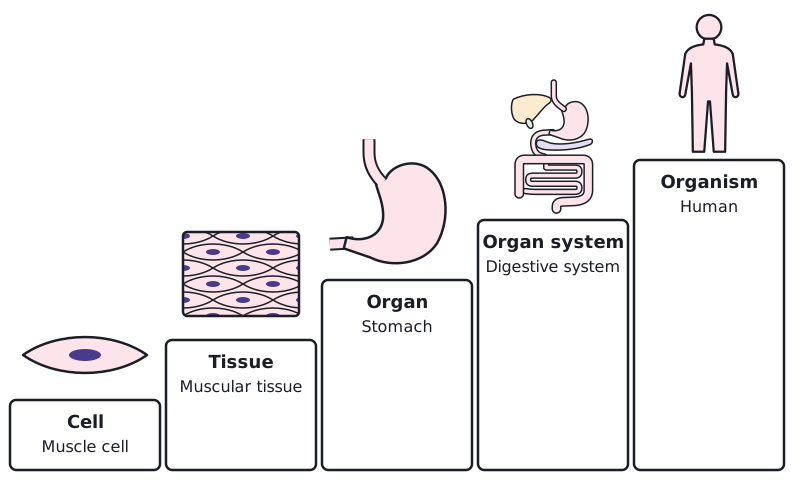
Living things are built up in levels. Each level is made from the one below it.
- Cell
- The basic building block of all living organisms.
- Tissue
- A group of cells with a similar structure and function.
- Organ
- An aggregation of tissues performing specific functions.
- Organ system
- Organs are organised into organ systems, which work together to form organisms.
The stomach is a good example of an organ. It is made of several tissues that work together. Muscular tissue churns the food, glandular tissue makes digestive juices (enzymes and acid), and epithelial tissue covers the inside and outside surfaces.
The stomach is one of the organs in the digestive system. This is an organ system: several organs working together to digest and absorb food.
| Level | Animal example | Plant example |
|---|---|---|
| Cell | A muscle cell | A palisade mesophyll cell |
| Tissue | Muscular tissue | Palisade mesophyll |
| Organ | The stomach or the heart | A leaf |
| Organ system | The digestive system or the circulatory system | Roots, stem and leaves (transport system) |
| Organism | A human | A tree |
An organ contains more than one tissue. To explain why something is an organ, say it is made of several tissues that work together to do a specific job.
 (opens full size in a new tab)
Written and checked against the AQA GCSE Combined Science (8464) specification · Updated October 2026