
The human endocrine systemSpec 4.5.3.1
In short
The endocrine system is made of glands that secrete hormones directly into the bloodstream. The blood carries each hormone to a target organ, where it produces an effect. Compared with the nervous system, its effects are slower but act for longer. The pituitary gland is a master gland: its hormones stimulate other glands to release hormones.
The endocrine system is made of glands which secrete chemicals called hormones directly into the bloodstream. The blood carries the hormone to a target organ where it produces an effect.
| Nervous system | Endocrine system | |
|---|---|---|
| Message carried by | Electrical impulses along neurones | Hormones (chemicals) in the blood |
| Speed of effect | Fast | Slower |
| How long the effect lasts | Short | Acts for longer |
The pituitary gland in the brain is a ‘master gland’. It secretes several hormones into the blood in response to body conditions. These hormones in turn act on other glands to stimulate other hormones to be released to bring about effects.
| Gland | Position in the body |
|---|---|
| Pituitary gland | At the base of the brain |
| Thyroid | In the neck |
| Adrenal glands | One on top of each kidney |
| Pancreas | In the abdomen, just below the stomach |
| Ovary | In the female pelvis, one on each side of the uterus |
| Testes | In the male scrotum |
Hormones from these glands that you need in this topic: the pituitary gland releases FSH and LH, the pancreas releases insulin, the ovaries release oestrogen and the testes release testosterone.
Higher tier (what this means)
Higher tier: only on the Higher tier papers. Foundation students can skip it. What the labels meanThe thyroid gland releases thyroxine and the adrenal glands release adrenaline.
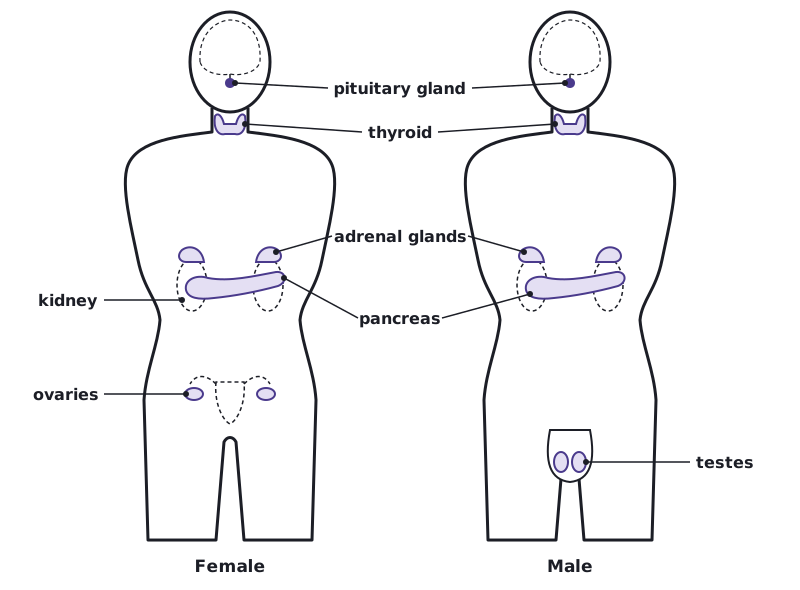 (opens full size in a new tab)
Compare with the nervous system in three words: slower, longer, chemical. Hormones are carried in the blood, so they reach every part of the body but only affect their target organ.
Written and checked against the AQA GCSE Combined Science (8464) specification · Updated October 2026