
Human defence systemsSpec 4.3.1.6
In short
Human defence systems stop pathogens entering the body or destroy them. Non-specific defences include the skin as a barrier, hairs and mucus in the nose, mucus and cilia in the trachea and bronchi, and hydrochloric acid in the stomach. If pathogens get in, white blood cells destroy them by phagocytosis, antibody production and antitoxin production.
Non-specific defences
These defences are the same whatever the pathogen. They stop pathogens getting into the body, or kill them before they can cause infection.
| Defence | How it protects |
|---|---|
| Skin | Acts as a physical barrier to pathogens and secretes substances that kill them. |
| Nose | Hairs and mucus trap particles, including pathogens, in the air you breathe in. |
| Trachea and bronchi | Lined with mucus that traps pathogens and cilia (tiny hairs) that move the mucus up to the throat, where it is swallowed. |
| Stomach | Produces hydrochloric acid, which kills pathogens that are swallowed with food, drink or mucus. |
The immune system
If a pathogen enters the body, the immune system tries to destroy it. White blood cells help to defend against pathogens in three ways.
- Phagocytosis: a white blood cell engulfs the pathogen and digests it.
- Antibody production: white blood cells make antibodies that target a particular pathogen and help to destroy it.
- Antitoxin production: white blood cells make antitoxins that neutralise the toxins released by pathogens.
Antibodies act on the pathogen. Antitoxins act on the toxins. Keep these two apart in your answers.
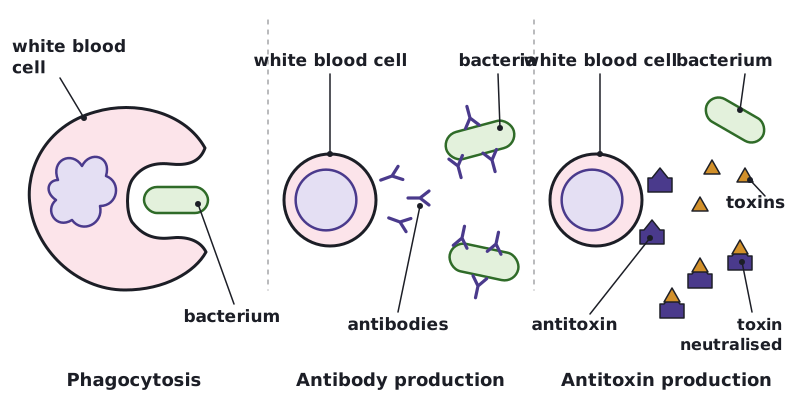 (opens full size in a new tab)
Written and checked against the AQA GCSE Combined Science (8464) specification · Updated October 2026