
Book a tutor

Mitosis

Reproduction and inheritance · Cell division, variation and evolution · note 1 of 7

MitosisSpec 3.28

In short

Mitosis is the division of a diploid cell to produce two cells that contain identical sets of chromosomes. The DNA is copied before the cell divides and the copies are shared equally, so both daughter cells are diploid and genetically identical to the parent cell and to each other. In humans, each daughter cell has 46 chromosomes.

Body cells are diploid. This means the nucleus contains two sets of chromosomes, which form pairs.

In mitosis, a diploid cell divides to produce two cells (daughter cells). Each daughter cell has an identical set of chromosomes to the parent cell, so the two cells are genetically identical to the parent and to each other.

The DNA is copied before the cell divides, and the copies are shared equally between the two daughter cells. So each daughter cell is also diploid. In humans each daughter cell has 46 chromosomes.

Mitosis
Division of a diploid cell to produce two cells that contain identical sets of chromosomes.
Diploid
A cell with two sets of chromosomes in its nucleus.
Genetically identical
Having exactly the same genetic information (the same DNA).
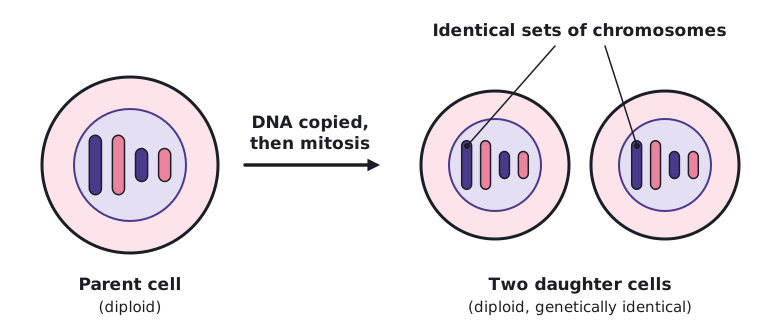
A diploid parent cell with four chromosomes (two pairs) is copied and divides by mitosis into two daughter cells, each with the same four chromosomes. (opens full size in a new tab)
Mitosis gives two genetically identical cells, each with the same set of chromosomes as the parent.
Exam tip:

To describe the result of mitosis, give the key points: two cells, identical sets of chromosomes to the parent cell, genetically identical. The stages of mitosis are not required.

Written and checked against the Edexcel IGCSE Science Double Award (4SD0) specification · Updated October 2026

Frequently asked questions

What is the difference between mitosis and meiosis?

Mitosis produces two diploid cells that are genetically identical to the parent cell and is used for growth, repair, cloning and asexual reproduction. Meiosis produces four haploid gametes, each with half the number of chromosomes and genetically different from each other. In humans, mitosis gives cells with 46 chromosomes and meiosis gives gametes with 23.

How does meiosis create genetic variation?

Meiosis creates genetic variation because the four gametes it makes are genetically different from each other and from the parent cell. Fertilisation is also random, so any sperm can fuse with any egg. This is why brothers and sisters are not identical to each other or to either parent.

How does natural selection lead to evolution?

Natural selection leads to evolution because individuals in a population show genetic variation and compete for resources. Those with characteristics best suited to the environment are more likely to survive and reproduce, passing on their alleles. Over many generations, the proportion of the population with the advantageous alleles increases, so inherited characteristics change.

All 4 questions on Cell division, variation and evolution