
Book a tutor

The reflex arc

Structure and functions in living organisms · The nervous system and the eye · note 3 of 5

The reflex arcSpec 2.90

In short

A reflex arc is the pathway of a reflex, a fast, automatic response that does not involve conscious thought. Impulses pass from a receptor along a sensory neurone to a relay neurone in the spinal cord, then along a motor neurone to an effector, such as a muscle. Reflexes are fast and protect the body from harm.

A reflex is a fast, automatic response to a stimulus that does not involve conscious thought. The pathway it follows is a reflex arc. Reflexes protect the body from harm. An example is pulling your finger away from a hot object.

  1. A receptor in the skin of the finger detects the heat (the stimulus).
  2. A sensory neurone carries impulses to the spinal cord (CNS).
  3. At a synapse the impulses pass to a relay neurone in the spinal cord.
  4. At another synapse the impulses pass to a motor neurone.
  5. The motor neurone carries the impulses to an effector, a muscle in the arm.
  6. The muscle contracts and the finger is pulled away.

The impulses do not have to reach the conscious part of the brain before the response happens, so the reflex is very fast.
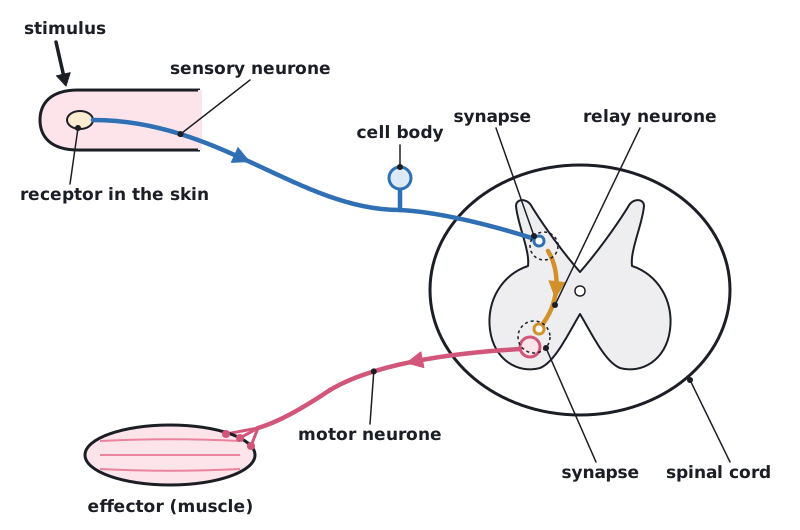
A reflex arc: a stimulus is detected by a receptor in the skin of a finger, a sensory neurone carries impulses into the spinal cord, a relay neurone in the spinal cord passes them on, and a motor neurone carries them out to a muscle (the effector); the two synapses are circled. (opens full size in a new tab)
A reflex arc: receptor, sensory neurone, relay neurone, motor neurone, effector. Impulses cross a synapse between each pair of neurones.
Exam tip:

Write the pathway in order and name each neurone: sensory, relay, motor. The effector is the muscle, not the motor neurone.

Written and checked against the Edexcel IGCSE Science Double Award (4SD0) specification · Updated October 2026

Frequently asked questions

What is a reflex arc?

A reflex arc is the pathway of a reflex, a fast, automatic response that does not involve conscious thought. A receptor detects the stimulus, a sensory neurone carries impulses to the spinal cord, a relay neurone passes them to a motor neurone, and the motor neurone carries them to an effector, such as a muscle that contracts.

Why are reflexes faster than normal responses?

Reflexes are faster because the impulses do not have to reach the conscious part of the brain before the response happens. The pathway is short: sensory neurone, relay neurone in the spinal cord, then motor neurone to the effector. Because no conscious thought is involved, the response is automatic, which helps protect the body from harm.

How does a nerve impulse cross the synapse?

A nerve impulse crosses a synapse using a chemical, because the electrical impulse cannot cross the gap. The first neurone releases a neurotransmitter into the synapse. The neurotransmitter diffuses across the gap and binds to receptors on the membrane of the next neurone, which triggers a new electrical impulse in that neurone.

All 5 questions on The nervous system and the eye