
Animal and plant cell structureSpec 2.2, 2.3, 2.4
In short
Animal and plant cells both have a nucleus, cytoplasm, a cell membrane, mitochondria and ribosomes. Plant cells also have a cellulose cell wall for strength and support, a large permanent vacuole filled with cell sap that keeps the cell firm, and often chloroplasts, which contain chlorophyll to absorb light energy for photosynthesis.
Most animal cells have a nucleus, cytoplasm, a cell membrane, mitochondria and ribosomes. Plant cells have all of these as well, and they often also have chloroplasts, a vacuole filled with cell sap and a cell wall.
| Structure | Function | Animal cell | Plant cell |
|---|---|---|---|
| Nucleus | Contains the genetic material (DNA) and controls the activities of the cell | Yes | Yes |
| Cytoplasm | Where most chemical reactions happen | Yes | Yes |
| Cell membrane | Controls the movement of substances into and out of the cell | Yes | Yes |
| Mitochondria | Where aerobic respiration takes place, releasing energy for the cell | Yes | Yes |
| Ribosomes | Where proteins are made (protein synthesis) | Yes | Yes |
| Cell wall | Made of cellulose; strengthens the cell and supports it | No | Yes |
| Chloroplasts | Contain chlorophyll, which absorbs light energy for photosynthesis | No | Yes (in cells exposed to light) |
| Vacuole | Filled with cell sap (a solution of sugars and salts); helps to keep the cell firm | No (or only small, temporary ones) | Yes (large, permanent) |
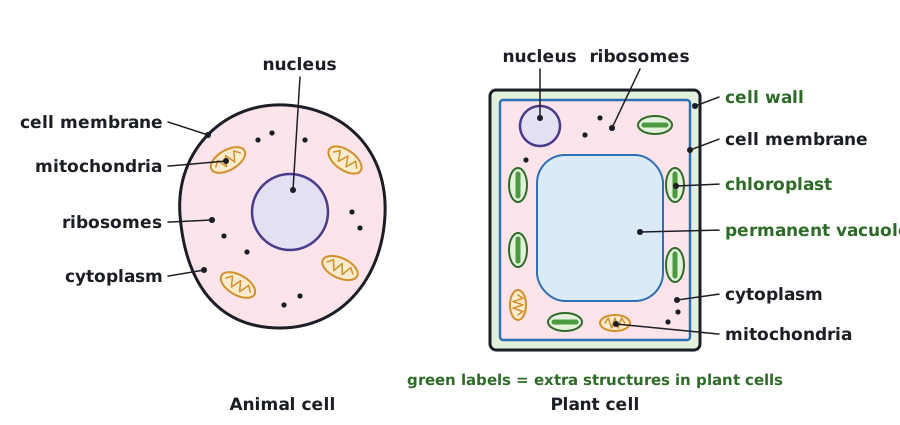 (opens full size in a new tab)
Similarities and differences
| Animal cell | Plant cell | |
|---|---|---|
| Similarities | Nucleus, cytoplasm, cell membrane, mitochondria, ribosomes | Nucleus, cytoplasm, cell membrane, mitochondria, ribosomes |
| Cell wall | Absent | Present, made of cellulose |
| Chloroplasts | Absent | Often present |
| Vacuole | Absent or small | Large vacuole with cell sap |
When asked to explain how a structure is related to its function, name the structure, state what it does, then link that to the job of the cell. Chloroplasts absorb light for photosynthesis, so they are found in cells that make food.
Quick check
Put these in order, smallest first: organ, cell, organelle, tissue, organ system.
Show answer
Organelle, cell, tissue, organ, organ system.
What is the function of the mitochondria?
Show answer
They are where aerobic respiration takes place, releasing energy for the cell.
Name three structures found in plant cells but not animal cells.
Show answer
Cell wall, chloroplasts and a large permanent vacuole.
Written and checked against the Edexcel IGCSE Science Double Award (4SD0) specification · Updated October 2026