
Carbohydrates, proteins and lipidsSpec 2.7, 2.8
In short
Carbohydrates, proteins and lipids are the three main groups of biological molecules. All contain carbon, hydrogen and oxygen, and proteins also contain nitrogen. They are large molecules built from smaller units: starch and glycogen from simple sugars (glucose), proteins from amino acids, and lipids from one glycerol and three fatty acids.
Carbohydrates, proteins and lipids (fats and oils) are the three main groups of biological molecules. They are all made from a small number of chemical elements.
| Biological molecule | Elements present |
|---|---|
| Carbohydrates | Carbon, hydrogen and oxygen (C, H, O) |
| Proteins | Carbon, hydrogen, oxygen and nitrogen (C, H, O, N), and sometimes sulfur (S) |
| Lipids (fats and oils) | Carbon, hydrogen and oxygen (C, H, O) |
Carbohydrates, proteins and lipids are large molecules made up from smaller basic units. Many small units are joined together to make one large molecule.
| Large molecule | Made from |
|---|---|
| Starch | Many simple sugars (glucose) joined together |
| Glycogen | Many simple sugars (glucose) joined together |
| Protein | Amino acids |
| Lipid | Fatty acids and glycerol (one glycerol and three fatty acids) |
Starch is the storage carbohydrate in plants. Glycogen is the storage carbohydrate in animals. Both are made from glucose, which is a simple sugar.
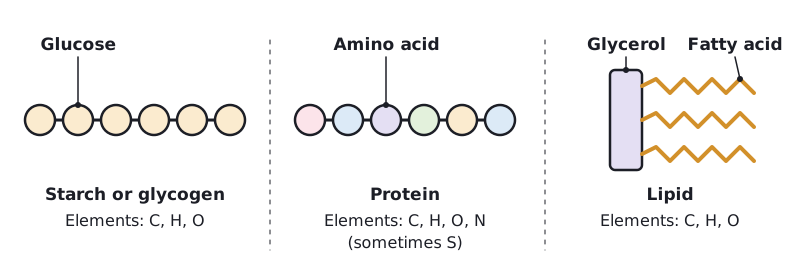 (opens full size in a new tab)
A lipid is made from one glycerol and three fatty acids. Learn the numbers 1 and 3, and remember that, of the three groups, only proteins contain nitrogen.
Written and checked against the Edexcel IGCSE Science Double Award (4SD0) specification · Updated October 2026