Book a tutor

Photosynthesis and its equations

Structure and functions in living organisms · Nutrition in flowering plants · note 1 of 6

Photosynthesis and its equationsSpec 2.18, 2.19

In short

Photosynthesis is the process by which plants and algae make glucose, using light energy absorbed by chlorophyll in the chloroplasts. Carbon dioxide and water react to form glucose and oxygen: 6CO₂ + 6H₂O → C₆H₁₂O₆ + 6O₂. It converts light energy to chemical energy stored in glucose, which plants use for respiration and to build new material.

Photosynthesis is the process by which plants and algae make glucose. The energy comes from light, which is absorbed by the green pigment chlorophyll in the chloroplasts.

Photosynthesis is important because it converts light energy to chemical energy. The chemical energy is stored in the glucose that is made. Plants use this glucose for respiration and to build new plant material. Almost all food chains start with this stored energy.

Light energy is used to react carbon dioxide and water to produce glucose and oxygen.

carbon dioxide + water → glucose + oxygen (in the presence of light and chlorophyll)
6CO₂ + 6H₂O → C₆H₁₂O₆ + 6O₂ (in the presence of light and chlorophyll)
Where the raw materials come from and where the products go
SubstanceReactant or productSource or fate
Carbon dioxideReactantDiffuses into the leaf from the air
WaterReactantAbsorbed from the soil by the roots and carried to the leaf in the xylem
GlucoseProductUsed for respiration, or to build new plant material (biomass)
OxygenProductDiffuses out of the leaf into the air
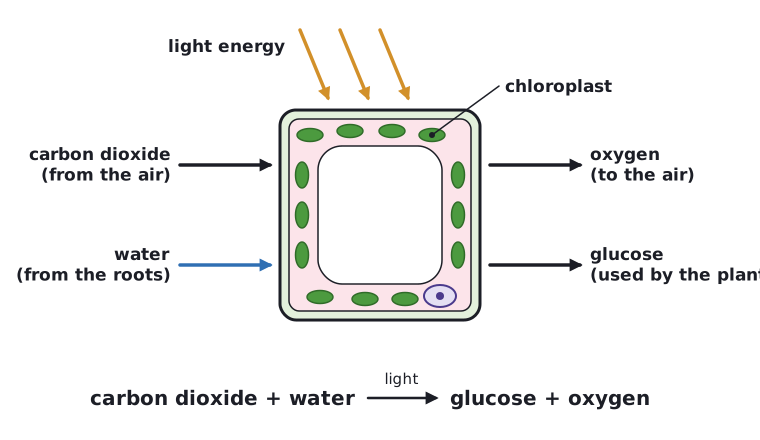
A plant cell with chloroplasts; light energy, carbon dioxide from the air and water from the roots go in, and oxygen and glucose come out, above the word equation carbon dioxide plus water gives glucose plus oxygen. (opens full size in a new tab)
Photosynthesis in a leaf cell: light energy is absorbed by chlorophyll in the chloroplasts.
Exam tip:

Light is the energy source, not a reactant, so it does not go in the word equation as a substance. Write 'in the presence of light' or put 'light energy' above the arrow. Check that the symbol equation is balanced: 6 carbon atoms, 12 hydrogen atoms and 18 oxygen atoms on each side.

Written and checked against the Edexcel IGCSE Science Double Award (4SD0) specification · Updated October 2026

Frequently asked questions

What are the limiting factors of photosynthesis?

The limiting factors of photosynthesis are light intensity, carbon dioxide concentration and temperature. A limiting factor is whichever is in shortest supply, so it stops the rate from going any faster. On a graph the rate rises while that factor limits it, then the line goes flat when a different factor becomes limiting.

How does light intensity affect the rate of photosynthesis?

As light intensity increases, the rate of photosynthesis increases, then levels off. Light provides the energy for the reaction, so at low light intensity the amount of light limits the rate. At high light intensity the rate stops rising because another factor, such as carbon dioxide concentration or temperature, has become the limiting factor.

How does temperature affect the rate of photosynthesis?

The rate of photosynthesis increases with temperature up to an optimum, then falls sharply. Photosynthesis is controlled by enzymes, so a higher temperature gives more collisions between enzymes and substrates. Above the optimum the enzymes are denatured because their active sites change shape, so the rate falls. Enzymes are not killed, because they are not alive.

All 5 questions on Nutrition in flowering plants