
Book a tutor

Fungi and protoctists

The nature and variety of living organisms · Characteristics and variety of living organisms · note 3 of 5

Fungi and protoctistsSpec 1.2

In short

Fungi are eukaryotic organisms that cannot photosynthesise. Most are made of thread-like hyphae forming a mycelium, have cell walls made of chitin and feed by saprotrophic nutrition: they secrete digestive enzymes onto food outside the body and absorb the products. Protoctists are microscopic single-celled eukaryotes, such as Amoeba, Chlorella and Plasmodium, which causes malaria.

Fungi

Fungi are eukaryotic organisms that are not able to carry out photosynthesis. Most have a body organised into a mycelium, made from thread-like structures called hyphae, which contain many nuclei. Some fungi are single-celled.

  • Their cell walls are made of chitin.
  • They feed by secreting digestive enzymes onto food material outside the body (extracellular secretion), then absorbing the organic products. This is called saprotrophic nutrition.
  • They may store carbohydrate as glycogen.

Mucor shows the typical fungal hyphal structure. Yeast is a single-celled fungus.
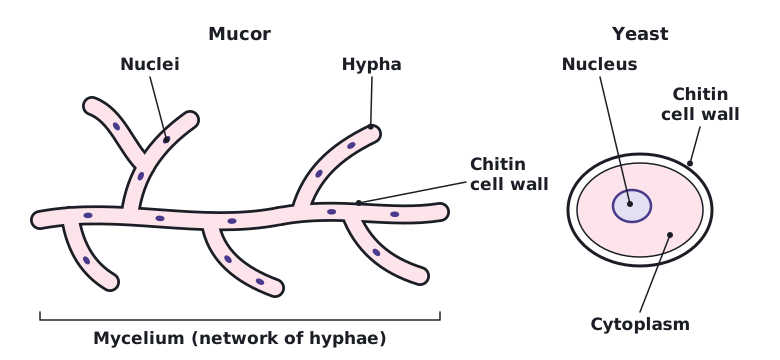
Mucor shown as a mycelium of branching hyphae with many nuclei and a chitin cell wall, beside a single yeast cell labelled nucleus, cytoplasm and chitin cell wall. (opens full size in a new tab)
Two fungi: Mucor is made of hyphae forming a mycelium; yeast is single-celled. Both have cell walls made of chitin.

Protoctists

Protoctists are microscopic single-celled eukaryotic organisms. They are a varied group.

  • Amoeba lives in pond water and has features like an animal cell.
  • Chlorella has chloroplasts and is more like a plant cell.
  • Plasmodium is a pathogen. It causes malaria.
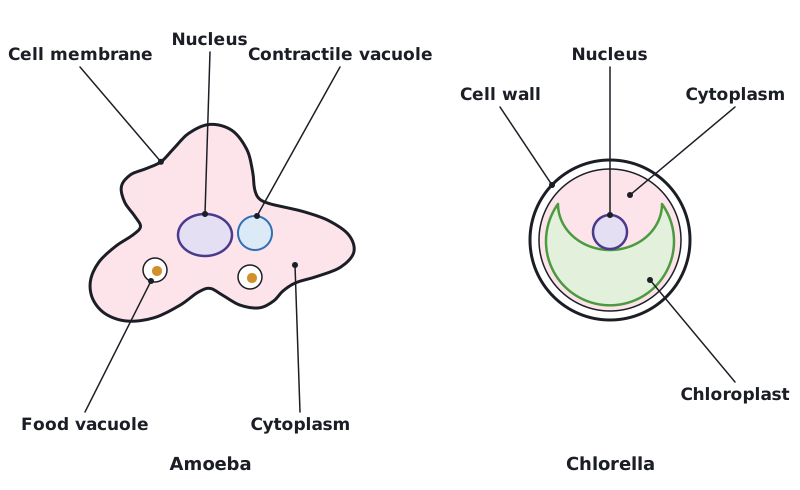
Two protoctists: Amoeba labelled cell membrane, nucleus, contractile vacuole, food vacuole and cytoplasm; Chlorella labelled cell wall, nucleus, cytoplasm and chloroplast. (opens full size in a new tab)
Two protoctists: Amoeba is like an animal cell, while Chlorella has a cell wall and a chloroplast, like a plant cell.
Common mistake:

Write 'protoctists', the word used in this specification. A protoctist is single-celled, but not every single-celled organism is a protoctist: bacteria and yeast are not.

Written and checked against the Edexcel IGCSE Science Double Award (4SD0) specification · Updated October 2026

Frequently asked questions

What are the eight characteristics of living organisms?

The eight characteristics are nutrition, respiration, excretion, response to surroundings, movement, control of internal conditions, reproduction, and growth and development. All living organisms show every one of them, although in different ways. A plant, for example, moves by growing towards light, while an animal can move from place to place.

What is the difference between excretion and egestion?

Excretion is removing the waste products made by chemical reactions in cells, such as carbon dioxide. Egestion is removing undigested food from the gut. Only excretion is one of the characteristics of living organisms, so in an exam do not use the two words as if they mean the same thing.

What is the difference between prokaryotic and eukaryotic cells?

Prokaryotic cells, such as bacteria, have no nucleus: their DNA is a circular chromosome free in the cytoplasm, often with extra rings called plasmids. Eukaryotic cells, found in plants, animals, fungi and protoctists, have their DNA enclosed in a nucleus. Bacteria are also microscopic and single-celled, while many eukaryotes are multicellular.

All 5 questions on Characteristics and variety of living organisms