
Book a tutor

Bacteria and yoghurt

Use of biological resources · Food production: micro-organisms and fish farming · note 3 of 4

Bacteria and yoghurtSpec 5.7

In short

Yoghurt is made by adding the bacterium Lactobacillus to pasteurised, cooled milk and incubating it at about 40–45 °C. The bacteria respire the milk sugar lactose and make lactic acid. The acid lowers the pH, making the milk proteins clump so the milk thickens and tastes sour, and stops many other micro-organisms growing.

Yoghurt is made from milk using the bacterium _Lactobacillus_. The bacteria respire the sugar in milk, called lactose, and make lactic acid.

  1. The milk is heated to a high temperature (pasteurised) to kill unwanted micro-organisms. It is then cooled.
  2. Lactobacillus is added to the milk. The equipment is kept clean so that other bacteria do not get in.
  3. The mixture is incubated (kept warm), at about 40–45 °C, for several hours, so the bacteria grow and respire.
  4. The bacteria turn lactose into lactic acid. The pH falls, and the acid makes the milk proteins clump together, so the milk thickens and gets a sour taste. The low pH also stops many other micro-organisms growing, so the yoghurt keeps for longer.
  5. The yoghurt is cooled to slow down the bacteria, then packaged.
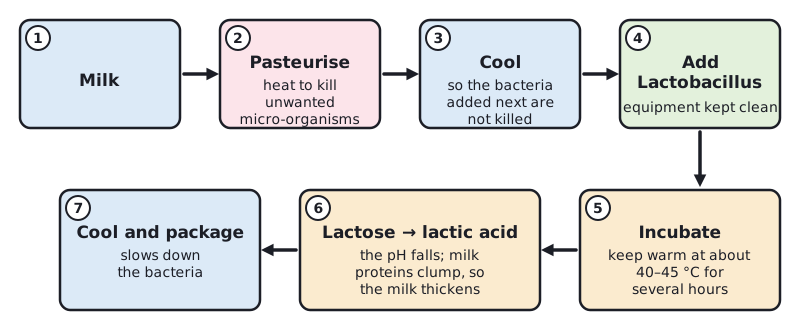
Flow chart of yoghurt production: milk is pasteurised to kill unwanted micro-organisms, cooled, Lactobacillus is added, the mixture is incubated at about 40–45 °C, the bacteria turn lactose into lactic acid so the pH falls and the milk thickens, then the yoghurt is cooled and packaged. (opens full size in a new tab)
Lactobacillus turns lactose into lactic acid, which lowers the pH and thickens the milk.
Common mistake:

The acid is made from lactose, not from the milk fat or protein. The acid is what thickens the milk, by making its proteins clump.

Written and checked against the Edexcel IGCSE Science Double Award (4SD0) specification · Updated October 2026

Frequently asked questions

What is anaerobic respiration in yeast?

Anaerobic respiration in yeast is respiration without oxygen, also called fermentation. Yeast breaks down glucose to make ethanol and carbon dioxide, releasing energy: glucose → ethanol + carbon dioxide. Bread making uses this, because the carbon dioxide bubbles trapped in the dough make it rise, and the ethanol evaporates during baking.

How is yoghurt made using bacteria?

Yoghurt is made by adding Lactobacillus bacteria to milk that has been pasteurised and cooled, then incubating it at about 40–45 °C. The bacteria turn the milk sugar lactose into lactic acid. The acid lowers the pH, making the milk proteins clump so the milk thickens, and stops many other micro-organisms growing.

Why are conditions controlled in an industrial fermenter?

Conditions are controlled so the micro-organisms grow and make the product as quickly as possible. Aseptic precautions stop unwanted microbes competing or spoiling the product. Nutrients supply materials for growth, the optimum temperature and pH let enzymes work fastest, sterile air allows aerobic respiration, and stirring spreads nutrients, oxygen and heat evenly.