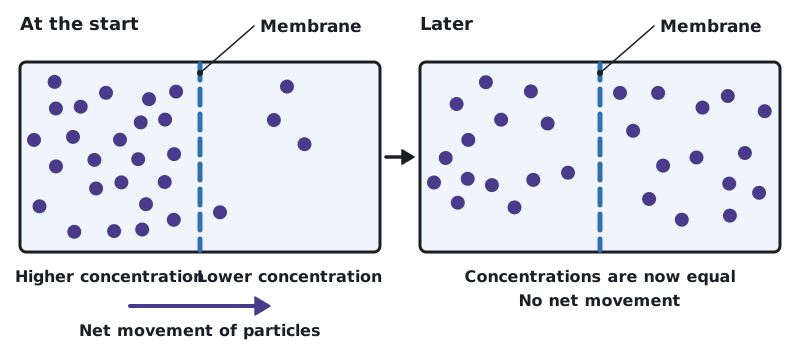
Diffusion is the net movement of particles from an area of higher concentration to an area of lower concentration, down a concentration gradient. It is a passive process, so it does not need energy from respiration. Oxygen, carbon dioxide and dissolved substances such as glucose diffuse into and out of cells through the cell membrane.
Diffusion is the net movement of particles from an area of higher concentration to an area of lower concentration. The particles move down a concentration gradient. It is a passive process, so it does not need energy from respiration.
Oxygen, carbon dioxide and dissolved substances such as glucose can diffuse into and out of cells through the cell membrane. For example, oxygen diffuses into a respiring cell because the concentration of oxygen is lower inside the cell, where it is being used up.
Always say net movement. Particles move in all directions, but more move down the gradient than up it.
Written and checked against the Edexcel IGCSE Science Double Award (4SD0) specification · Updated October 2026
Frequently asked questions
How does osmosis differ from diffusion?
Osmosis is a special type of diffusion that involves only water moving through a partially permeable membrane. Diffusion is the net movement of any particles, such as oxygen or carbon dioxide, from a higher to a lower concentration. In osmosis, water moves from a dilute solution to a more concentrated solution. Neither process needs energy from respiration.
Why does osmosis not require energy?
Osmosis does not require energy because it is a passive process. Water simply diffuses from a dilute solution to a more concentrated solution through a partially permeable membrane, so no energy from respiration is used. Only active transport, which moves substances against a concentration gradient, needs energy from respiration.
Why is active transport needed in plant roots?
Active transport is needed in plant roots because root hair cells often contain a higher concentration of mineral ions than the soil. Diffusion would move ions out of the cell, so the cells must use energy from respiration to move ions in against the concentration gradient. This lets plants take in ions that are in short supply.

 (opens full size in a new tab)