
Factors affecting the rate of photosynthesisSpec 2.20
In short
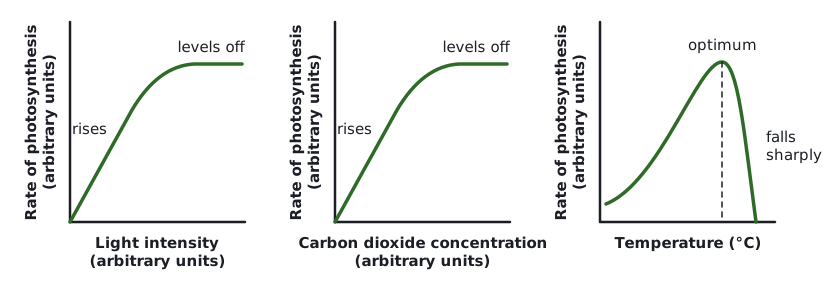
The rate of photosynthesis is affected by light intensity, carbon dioxide concentration and temperature, and any one of these can be the limiting factor. Increasing light or carbon dioxide raises the rate until it levels off, because another factor becomes limiting. Temperature raises the rate up to an optimum, then the enzymes are denatured and the rate falls sharply.
A limiting factor is something that is in short supply, so it stops the rate of a process from going any faster. The rate of photosynthesis is affected by carbon dioxide concentration, light intensity and temperature.
| Factor | Effect on rate | Why |
|---|---|---|
| Light intensity | Rate increases as light intensity increases, then levels off | Light provides the energy for the reaction. At low light, the amount of light limits the rate. At high light, another factor is limiting. |
| Carbon dioxide concentration | Rate increases as concentration increases, then levels off | Carbon dioxide is a reactant. At low concentration, there is not enough of it. At high concentration, another factor is limiting. |
| Temperature | Rate increases up to an optimum temperature, then falls sharply | Photosynthesis is controlled by enzymes. A higher temperature gives more collisions between enzymes and substrates. Above the optimum the enzymes are denatured, so the rate falls. |
 (opens full size in a new tab)
On a graph, the rate rises while the factor on the x-axis is the limiting factor. Where the line goes flat, that factor is no longer limiting and something else is. Reading a graph this way is a common exam question.
To describe a graph, state the trend, then quote data from it, for example the value where the line levels off. For a table of results, plot the factor you changed on the x-axis and the rate on the y-axis.
Do not write that the enzymes are 'killed' at high temperature. Enzymes are not alive. They are denatured, because their active site changes shape.
Written and checked against the Edexcel IGCSE Science Double Award (4SD0) specification · Updated October 2026