
Heart rate, exercise and adrenalineSpec 2.66
In short
Heart rate is the number of heartbeats per minute. During exercise the muscles respire faster, so they need more oxygen and glucose and produce more carbon dioxide. The heart rate increases so blood delivers these faster and removes carbon dioxide. Adrenaline, released by the adrenal glands when frightened or excited, also increases heart rate.
The heart rate is the number of heartbeats per minute. At rest it is steady, but it changes to match what the body needs.
Exercise
- During exercise the muscles respire faster to release more energy.
- They need more oxygen and glucose, and they produce more carbon dioxide.
- The heart rate increases, so blood flows to the muscles faster.
- More oxygen and glucose are delivered, and carbon dioxide is carried away more quickly.
After exercise, the heart rate stays high for a while and then gradually returns to its resting rate.
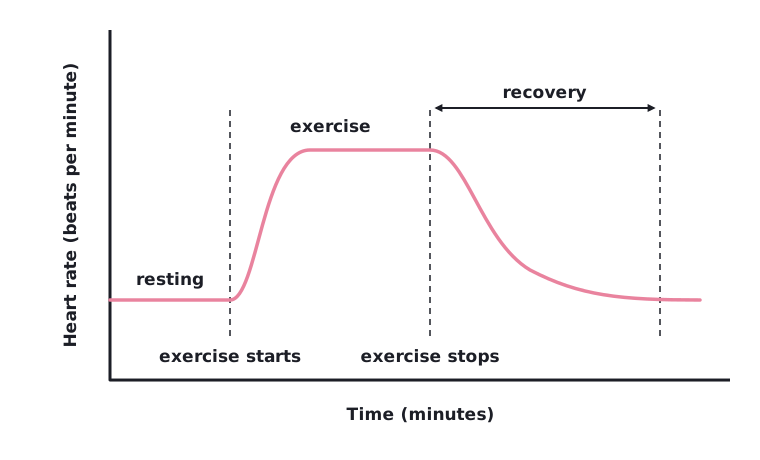 (opens full size in a new tab)
Adrenaline
Adrenaline is a hormone released by the adrenal glands when you are frightened or excited. It prepares the body for 'fight or flight'. It makes the heart rate increase, so more blood, with more oxygen and glucose, reaches the muscles and they can release more energy quickly.
Heart rate from a pulse count
A student counts 18 pulses in 15 seconds at rest and 36 pulses in 15 seconds straight after exercise. Calculate the increase in heart rate in beats per minute.
- There are 4 lots of 15 seconds in a minute.
- Resting rate = 18 × 4 = 72 beats per minute.
- Rate after exercise = 36 × 4 = 144 beats per minute.
- Increase = 144 − 72.
Answer: 72 beats per minute
In an 'explain' answer, link the steps: exercise, so more respiration, so more oxygen and glucose needed and more carbon dioxide made, so higher heart rate.
Written and checked against the Edexcel IGCSE Science Double Award (4SD0) specification · Updated October 2026