
Human insulin from genetically modified bacteriaSpec 5.14
In short
Human insulin is made by genetically modified bacteria. The human insulin gene is cut out with a restriction enzyme, inserted into a plasmid cut with the same enzyme and joined by ligase, making a recombinant plasmid. The bacteria are grown in a fermenter, divide rapidly and make insulin, which is extracted and purified to treat diabetes.
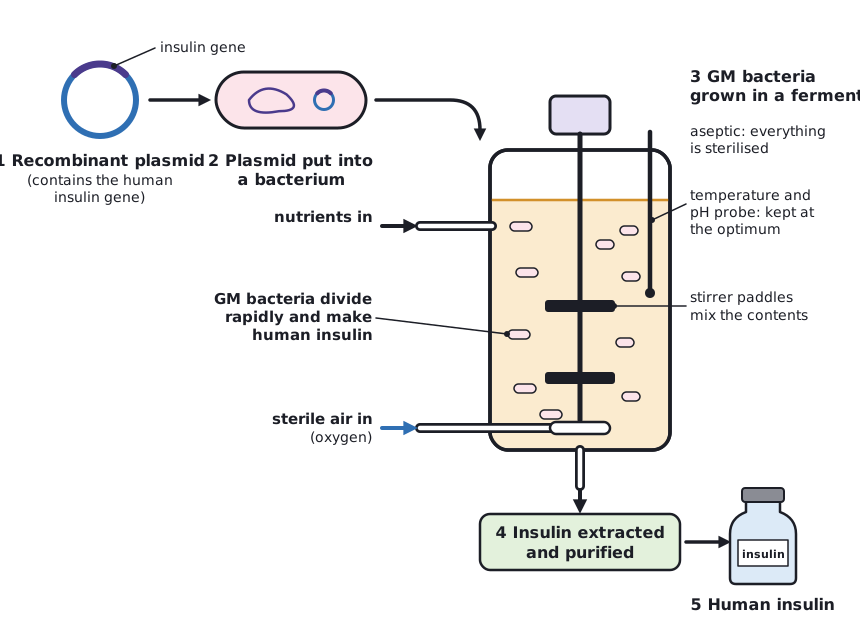
People with type 1 diabetes need insulin. Large amounts of human insulin can be made by genetically modified (GM) bacteria grown in a fermenter.
- The human gene for insulin is cut out of human DNA using a restriction enzyme.
- A plasmid is cut with the same restriction enzyme, the gene is inserted and ligase joins the DNA. This makes a recombinant plasmid.
- The recombinant plasmid is put into bacteria. These GM bacteria now contain the human insulin gene.
- The bacteria are grown in a fermenter, where they divide rapidly to make huge numbers of bacteria.
- The bacteria make human insulin. The insulin is then extracted and purified before it is used to treat people with diabetes.
Conditions in the fermenter
- Aseptic precautions, so that other micro-organisms do not contaminate the culture.
- A supply of nutrients for growth.
- An optimum temperature and pH for the bacteria.
- Oxygen supplied, and the contents stirred (agitated) so that nutrients and oxygen are mixed evenly.
 (opens full size in a new tab)
Exam tip:
Bacteria are used because they reproduce very quickly, so a large amount of insulin is made in a short time.
Written and checked against the Edexcel IGCSE Science Double Award (4SD0) specification · Updated October 2026