
Industrial fermentersSpec 5.8
In short
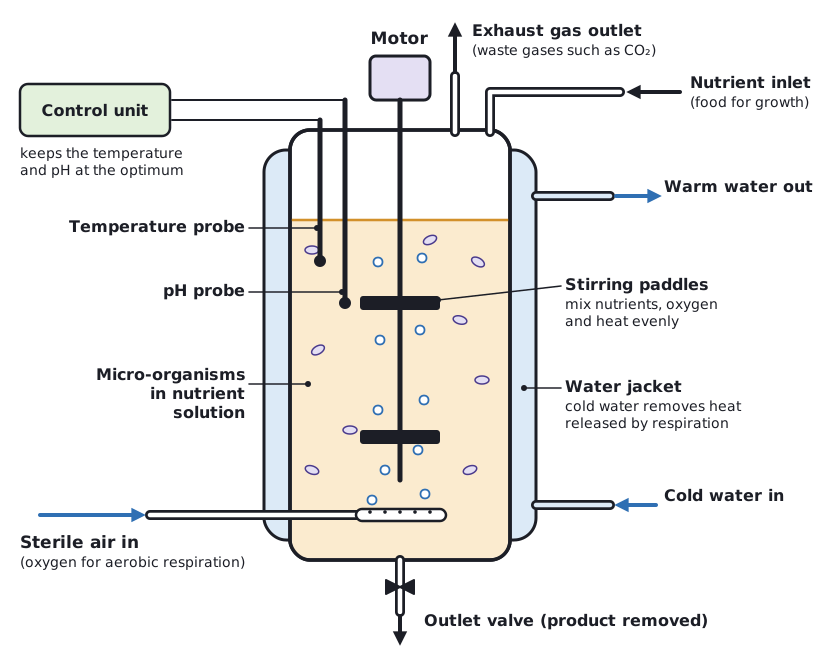
An industrial fermenter is a large container in which micro-organisms are grown in large numbers to make a product such as a food, medicine or enzyme. Conditions are controlled for fast growth: aseptic precautions, nutrients, optimum temperature using a cooling water jacket, optimum pH, sterile air for oxygenation, and stirring paddles for agitation.
A fermenter is a large container in which micro-organisms are grown in large numbers to make a product such as a food, a medicine or an enzyme. The conditions are controlled so that the micro-organisms grow and make the product as quickly as possible.
 (opens full size in a new tab)
| Condition | Why it is needed |
|---|---|
| Aseptic precautions | The fermenter and nutrients are sterilised, so no other micro-organisms get in. Unwanted microbes would compete for nutrients, spoil the product or cause disease. |
| Nutrients | A supply of a carbon source such as glucose, plus nitrogen and mineral ions, so the micro-organisms can grow and make the product. |
| Optimum temperature | Enzymes work fastest at the optimum. Respiration releases heat, so a cooling water jacket keeps the temperature constant. Too hot would denature enzymes. |
| Optimum pH | Enzymes work best at the optimum pH. A probe monitors pH, and acid or alkali is added to keep it steady. |
| Oxygenation | Sterile air is bubbled in, so the micro-organisms can respire aerobically, release more energy and grow faster. |
| Agitation | Stirring paddles mix the contents, so nutrients, oxygen and heat are spread evenly and the micro-organisms are in contact with the nutrients. |
For each condition, say what it is and why it is needed. Mark schemes link it to growth: for example, the optimum temperature gives the fastest enzyme activity, so faster growth and more product.
Quick check
What gas makes bread dough rise?
Show answer
Carbon dioxide, from anaerobic respiration in yeast.
Write the word equation for anaerobic respiration in yeast.
Show answer
Glucose → ethanol + carbon dioxide.
Which bacterium is used to make yoghurt, and what does it make from lactose?
Show answer
Lactobacillus; it makes lactic acid.
Why are aseptic precautions used in a fermenter?
Show answer
To stop unwanted micro-organisms getting in and competing with or spoiling the product.
Written and checked against the Edexcel IGCSE Science Double Award (4SD0) specification · Updated October 2026