
The endocrine systemSpec 7.1
In short
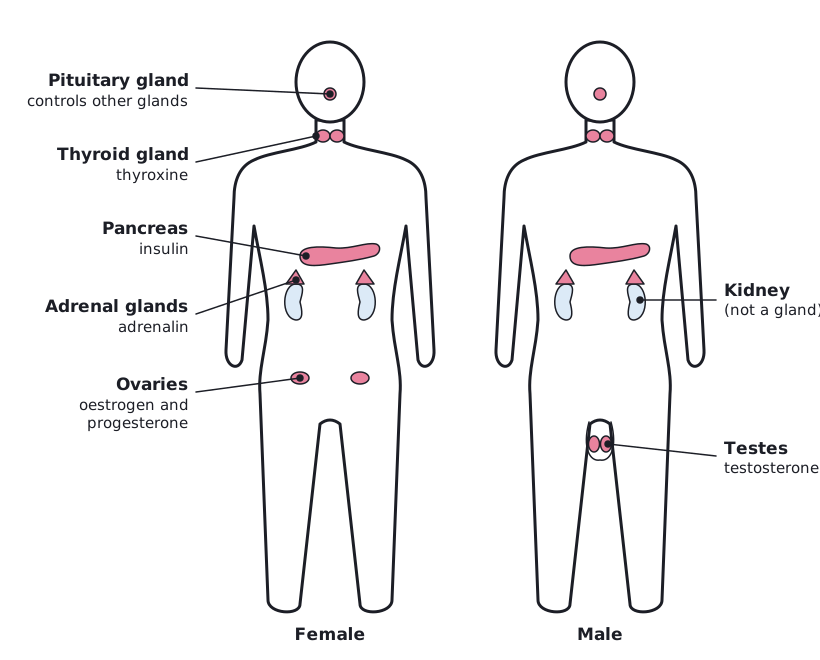
Hormones are chemical messengers made in endocrine glands and released straight into the blood. The blood plasma carries them around the body, but each hormone affects only its target organs. The glands include the pituitary gland, thyroid gland, pancreas, adrenal glands, ovaries and testes. Hormones travel in the blood, not along nerves.
Hormones are chemical messengers. They are made in endocrine glands and released straight into the blood. The blood plasma carries them around the whole body, but each hormone only affects its target organs.
- An endocrine gland secretes a hormone into the blood.
- The blood carries the hormone around the body.
- The hormone reaches its target organ and causes a response.
| Gland | Where it is | Hormone made |
|---|---|---|
| Pituitary gland | At the base of the brain | Releases hormones that control other glands and organs |
| Thyroid gland | In the neck | Thyroxine |
| Pancreas | In the abdomen, below the stomach | Insulin |
| Adrenal glands | One on top of each kidney | Adrenalin |
| Ovaries | In the lower abdomen of a female | Oestrogen and progesterone |
| Testes | In the scrotum of a male | Testosterone |
Higher tier (what this means)
Higher tier: only on the Higher tier papers. Foundation students can skip it. What the labels mean- The pituitary gland releases FSH and LH, which act on the ovaries, and TSH, which acts on the thyroid gland.
- The pancreas also makes a second hormone, glucagon.
Hormones travel in the blood, not along nerves. Write ‘carried in the blood’ or ‘in the blood plasma’ to get the mark.
 (opens full size in a new tab)
Written and checked against the Edexcel GCSE Combined Science (1SC0) specification · Updated October 2026