
Levels of organisationSpec 9.1
In short
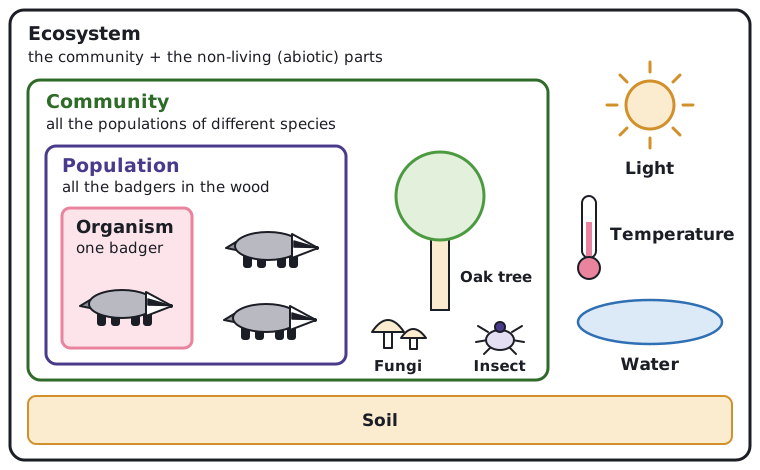
The levels of organisation in ecology go from organism to population, community and ecosystem, and each level contains the one before. A population is all the organisms of one species in an area, a community is all the populations of different species there, and an ecosystem is a community together with the non-living (abiotic) parts of its environment.
Living things can be described at different levels of organisation, from a single organism up to a whole ecosystem. Each level contains the one before it.
| Level | What it means | Example |
|---|---|---|
| Organism | A single living thing | One badger |
| Population | All the organisms of one species living in the same area | All the badgers in a wood |
| Community | All the populations of different species living in the same area | The badgers, foxes, oak trees, insects and fungi in the wood |
| Ecosystem | A community together with the non-living (abiotic) parts of its environment | The wood, including its soil, water, light and temperature |
An ecosystem is made of living (biotic) and non-living (abiotic) parts that interact with each other. Energy and materials move between them.
A population is one species only. If an answer mentions different species living together, it is describing a community.
 (opens full size in a new tab)
Written and checked against the Edexcel GCSE Combined Science (1SC0) specification · Updated October 2026