
Monohybrid inheritanceSpec 3.14
In short
Monohybrid inheritance is the inheritance of a characteristic controlled by a single gene. It can be shown using a genetic diagram, a Punnett square or a family pedigree. Crossing two heterozygous parents, such as Tt × Tt, gives the genotypes 1 TT : 2 Tt : 1 tt, so the phenotype ratio is 3 dominant : 1 recessive.
Monohybrid inheritance is the inheritance of a characteristic controlled by a single gene. You can show it using a genetic diagram, a Punnett square or a family pedigree.
- Choose letters for the alleles: a capital for dominant, lower case for recessive.
- Write the genotypes of the parents.
- Write the possible gametes from each parent. Each gamete has one allele.
- Combine the gametes in a Punnett square to show the possible genotypes of the offspring.
- Write the phenotype for each genotype.
Crossing two heterozygous pea plants
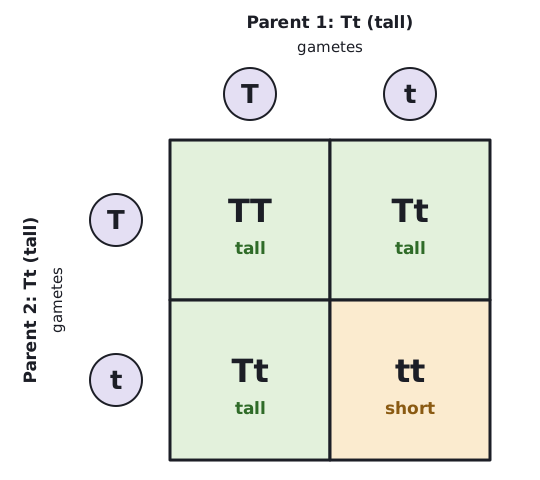
Tall (T) is dominant to short (t). Two heterozygous tall plants (Tt) are crossed. Show the possible offspring.
- Parent genotypes: Tt and Tt.
- Gametes: T or t from each parent.
- Punnett square: top row (gametes from parent 1) T and t; side column (gametes from parent 2) T and t. The four boxes are TT, Tt, Tt and tt.
- Phenotypes: TT, Tt and Tt are tall; tt is short.
Answer: Offspring genotypes: 1 TT : 2 Tt : 1 tt. Phenotypes: 3 tall : 1 short.
 (opens full size in a new tab)
Family pedigrees
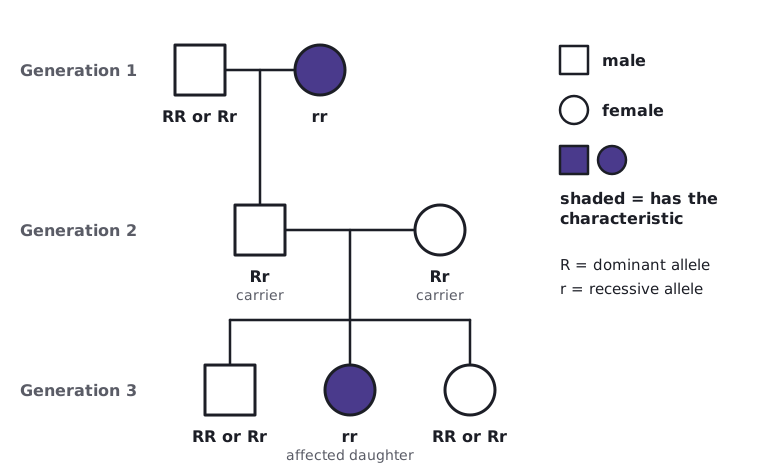
A family pedigree (family tree) shows who in a family has a characteristic. Squares are usually males and circles are females. Shaded shapes show people with the characteristic. A horizontal line joins the parents and a vertical line leads down to their children.
- If two parents who do not have a characteristic have a child who does, the characteristic is recessive. Both parents must be carriers, heterozygous with one copy of the recessive allele.
- If two parents who both have a characteristic have a child who does not, the characteristic is dominant. Both parents must be heterozygous.
 (opens full size in a new tab)
In a pedigree question, start by finding two parents with the same phenotype and a child with the other phenotype. That tells you which allele is dominant.
Written and checked against the Edexcel GCSE Combined Science (1SC0) specification · Updated October 2026