
Temperature, substrate concentration and pHSpec 1.9
In short
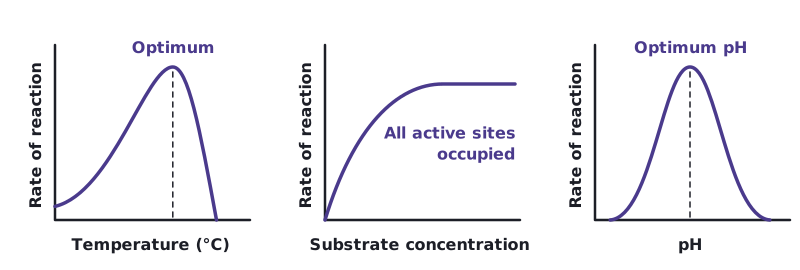
Enzyme activity increases with temperature up to an optimum, around 37 °C for many human enzymes, because enzyme and substrate collide more often. Above the optimum the enzyme is denatured and the rate falls. Each enzyme also has an optimum pH. Increasing substrate concentration raises the rate until all the active sites are occupied, then the rate levels off.
Temperature
As temperature increases, the particles move faster and have more kinetic energy. Enzyme and substrate collide more often, so the rate of reaction increases. The rate is highest at the optimum temperature, which is around 37 °C for many human enzymes. Above the optimum, the active site changes shape, the enzyme is denatured and the rate falls quickly towards zero.
Substrate concentration
At low substrate concentration, increasing it makes the rate increase, because collisions between substrate and active sites are more frequent. Eventually all the active sites are occupied at once. Adding more substrate then has no effect, so the rate levels off. The enzyme concentration is now limiting the rate.
pH
Each enzyme has an optimum pH where it works fastest. If the pH is higher or lower than the optimum the rate decreases, and at extreme pH values the active site changes shape and the enzyme is denatured. Different enzymes have different optimum pH values.
 (opens full size in a new tab)
| Factor | Below the optimum / low | At the optimum | Above the optimum / high |
|---|---|---|---|
| Temperature | Rate increases as particles move faster and collide more often | Highest rate | Enzyme denatured, rate falls |
| pH | Rate decreases as pH moves away from the optimum, and the enzyme is denatured at extreme pH | Highest rate | Rate decreases as pH moves away from the optimum, and the enzyme is denatured at extreme pH |
| Substrate concentration | Rate increases | Not applicable | Rate stops increasing when all active sites are occupied |
When a graph falls after a peak, always give the reason: the enzyme has been denatured. When a graph levels off, say all the active sites are occupied.
Written and checked against the Edexcel GCSE Combined Science (1SC0) specification · Updated October 2026