
Factors affecting water uptakeSpec 6.12
In short
The rate of water uptake by a plant depends on the rate of transpiration, which is increased by higher light intensity, more air movement and higher temperature. Light opens the stomata, moving air carries water vapour away to keep a steep concentration gradient, and warmth makes water evaporate and diffuse faster. A potometer measures the rate.
The rate at which a plant takes up water depends on the rate of transpiration. When more water is lost from the leaves, more is pulled up through the xylem. Three environmental factors affect it.
| Factor | Effect on water uptake | Explanation |
|---|---|---|
| Light intensity | Higher light intensity increases the rate | Stomata open in the light, so more water vapour can diffuse out of the leaf. Low light or darkness makes the stomata close. |
| Air movement | More air movement increases the rate | Moving air carries away water vapour from around the stomata. This keeps a steep concentration gradient, so water vapour diffuses out faster. |
| Temperature | Higher temperature increases the rate | Water evaporates from the cells faster, and water vapour particles move faster, so diffusion out of the leaf is faster. |
A potometer is used to measure the rate of water uptake of a leafy shoot. As the shoot takes up water, an air bubble moves along a capillary tube. The distance moved in a set time is a measure of the rate. You can compare the rate in different conditions, for example with and without a fan, or in the light and in the shade.
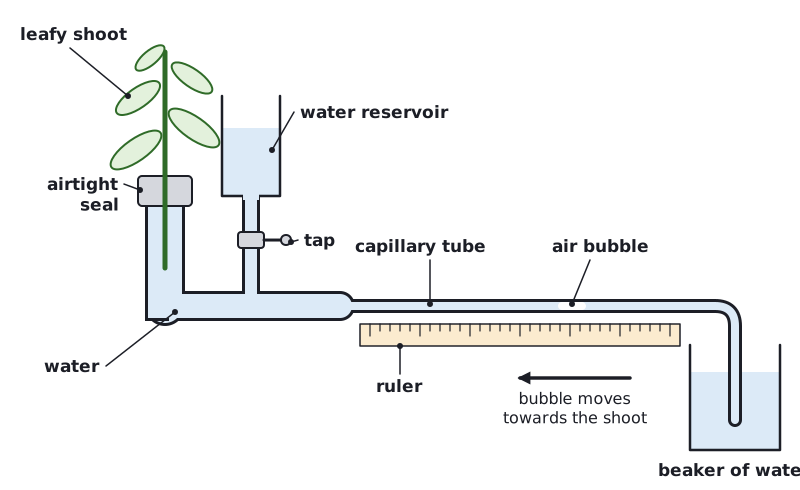 (opens full size in a new tab)
Say what happens and why. 'The rate goes up' is not enough. Add 'because the stomata are open' or 'because the water vapour is carried away, keeping a steep concentration gradient'.
Written and checked against the Edexcel GCSE Combined Science (1SC0) specification · Updated October 2026