
The specific immune systemSpec 5.13
In short
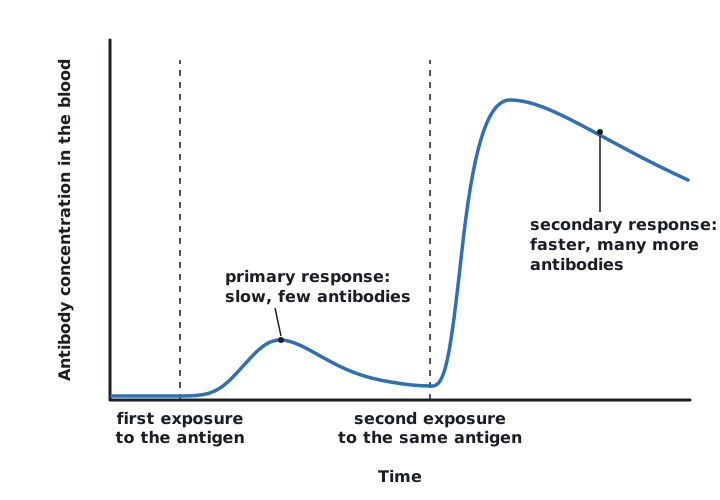
The specific immune system responds to one particular pathogen. Antigens on the pathogen trigger lymphocytes to produce antibodies, which bind to the antigens and help destroy it. Memory lymphocytes are also made. If the same pathogen returns, they give a faster secondary response with more antibodies, so the person does not become ill.
If a pathogen gets past the first defences, the specific immune system responds. It is called specific because the response is aimed at one particular pathogen.
- Antigen
- A molecule, usually on the surface of a pathogen, that the immune system recognises as foreign and that triggers an immune response.
- Antibody
- A protein made by white blood cells (lymphocytes) that binds to a specific antigen.
- Memory lymphocyte
- A white blood cell that stays in the body after an infection and can respond quickly if the same antigen returns.
The primary response
- The body is exposed to a pathogen.
- The antigens on the pathogen trigger an immune response.
- Lymphocytes with antibodies that fit the antigen divide, and the response causes the production of antibodies.
- The antibodies bind to the antigens on the pathogen and help to destroy it.
- The antigens also trigger production of memory lymphocytes.
The secondary response
If the same pathogen enters the body again, the memory lymphocytes recognise its antigens. They respond faster and make more antibodies than the first time, so the pathogen is destroyed before it can make the person ill. The person is now immune to that pathogen.
For the secondary response, write three things: it is quicker, more antibodies are made, and memory lymphocytes are responsible.
 (opens full size in a new tab)
Written and checked against the Edexcel GCSE Combined Science (1SC0) specification · Updated October 2026