
How four hormones control the cycleSpec 7.5
In short
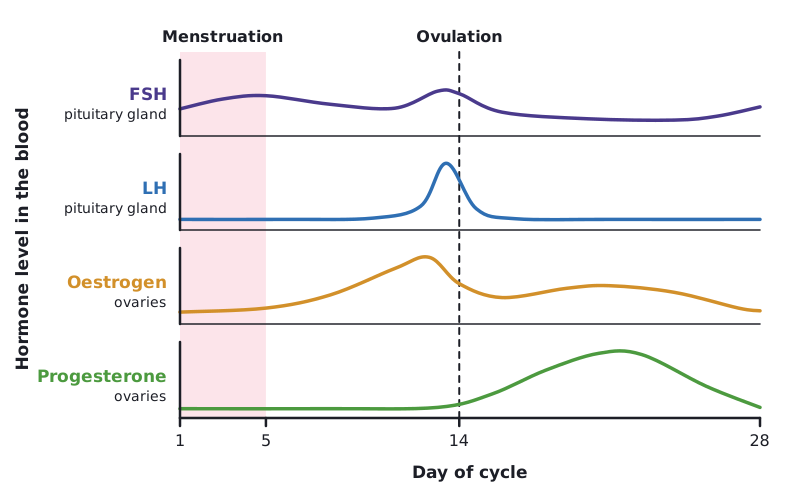
The menstrual cycle is controlled by four hormones: FSH and LH from the pituitary gland, and oestrogen and progesterone from the ovaries. FSH makes an egg mature and stimulates oestrogen production. High oestrogen inhibits FSH and stimulates the release of LH, which causes ovulation. Progesterone maintains the uterus lining and inhibits FSH and LH.
Four hormones interact to control the cycle. FSH and LH are released by the pituitary gland. Oestrogen and progesterone are made by the ovaries.
| Hormone | Made in | What it does |
|---|---|---|
| FSH | Pituitary gland | Causes an egg to mature in an ovary. Stimulates the ovaries to produce oestrogen |
| Oestrogen | Ovaries | Repairs and builds up the uterus lining. Inhibits FSH. Stimulates the release of LH |
| LH | Pituitary gland | Causes ovulation |
| Progesterone | Ovaries | Maintains the uterus lining. Inhibits FSH and LH |
- FSH makes an egg mature and stimulates the ovaries to make oestrogen.
- Oestrogen repairs the uterus lining. When oestrogen is high it inhibits FSH and stimulates the release of LH.
- LH causes ovulation, around day 14.
- After ovulation the ovary produces progesterone, which maintains the lining and inhibits FSH and LH, so no more eggs mature.
- If there is no pregnancy, progesterone falls. The lining is no longer maintained and breaks down. This is menstruation.
Exam tip:
Always say what each hormone does to the next one: stimulates or inhibits. Just writing ‘oestrogen affects LH’ will not score.
 (opens full size in a new tab)
Written and checked against the Edexcel GCSE Combined Science (1SC0) specification · Updated October 2026