Book a tutor

Receptors and the nervous pathway

Cells and control · Neurones and reflexes · note 1 of 5

Receptors and the nervous pathwaySpec 2.13

In short

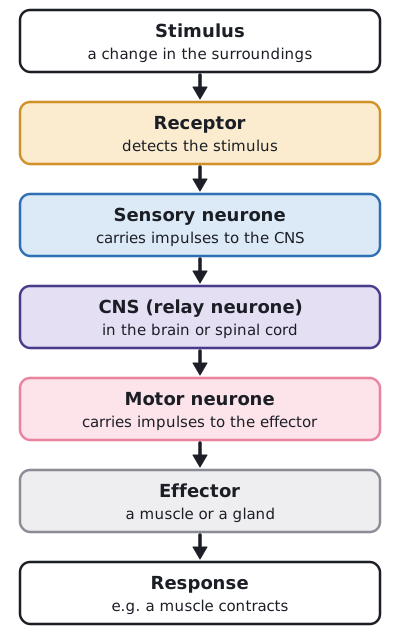
A nervous pathway carries information from a sensory receptor to an effector. A receptor detects a stimulus and produces an electrical impulse. A sensory neurone carries it to the central nervous system, a relay neurone passes it on, and a motor neurone carries it to an effector, a muscle or gland, which produces a response.

The nervous system lets an organism respond to changes in its surroundings. The brain and spinal cord make up the central nervous system (CNS). A sensory receptor is a cell that detects a stimulus (a change in the surroundings) and produces an electrical impulse.

  1. A sensory receptor detects a stimulus.
  2. A sensory neurone carries the electrical impulses to the CNS.
  3. A relay neurone in the CNS passes the impulses on.
  4. A motor neurone carries the impulses from the CNS to an effector (a muscle or a gland).
  5. The effector produces a response.
The three types of neurone
NeuroneFunction
Sensory neuroneCarries impulses from a receptor to the CNS
Relay neuroneFound in the CNS. Connects the sensory neurone to the motor neurone
Motor neuroneCarries impulses from the CNS to an effector
Flow chart of the nervous pathway: stimulus, receptor, sensory neurone, CNS (relay neurone), motor neurone, effector, response. (opens full size in a new tab)
The pathway from stimulus to response.

Written and checked against the Edexcel GCSE Combined Science (1SC0) specification · Updated October 2026

Frequently asked questions

What is a reflex arc?

A reflex arc is the pathway followed in a reflex, a fast, automatic response that does not involve conscious thought. A receptor detects a stimulus, a sensory neurone carries impulses to the CNS, a relay neurone passes them to a motor neurone, and the motor neurone carries them to an effector, which responds.

Why are reflexes faster than normal responses?

Reflexes are faster because the impulses do not have to travel to the conscious part of the brain before the response. The pathway goes from the sensory neurone through a relay neurone in the CNS straight to the motor neurone, so the effector responds automatically. This speed protects the body from harm.

How does a nerve impulse cross the synapse?

A nerve impulse cannot cross the synapse as an electrical impulse. Instead, when it reaches the end of the first neurone, a chemical called a neurotransmitter is released into the gap. The neurotransmitter diffuses across and binds to receptors on the next neurone, which triggers a new electrical impulse in that neurone.

All 5 questions on Neurones and reflexes