
Xylem and phloemSpec 6.8
In short
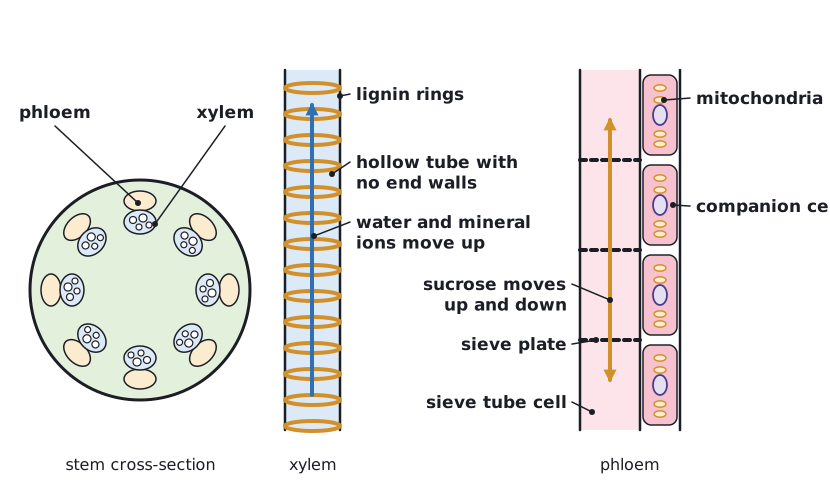
Xylem and phloem are the two transport tissues in a plant. Xylem carries water and mineral ions from the roots and is made of lignified dead cells that form hollow tubes. Phloem carries sucrose and is made of living sieve tube cells and companion cells, whose mitochondria release the energy needed for transport.
Xylem and phloem are the two transport tissues in a plant. They run together through the roots, stem and leaves.
Xylem
The xylem carries water and mineral ions from the roots to the rest of the plant. It is made of lignified dead cells.
- The cells are dead, with no cytoplasm or nucleus, and the end walls between them have broken down, so they form a continuous hollow tube. Water can flow through easily.
- The walls are strengthened with lignin, which is strong and waterproof. This stops the tubes from collapsing and supports the plant.
Phloem
The phloem carries sucrose around the plant. It is made of living cells that use energy to transport sucrose.
- Sieve tube cells are joined end to end. The end walls have holes (sieve plates), so dissolved sucrose can pass from cell to cell.
- Companion cells are next to the sieve tube cells. They have many mitochondria to release the energy that is needed for the transport of sucrose.
| Xylem | Phloem | |
|---|---|---|
| Substances carried | Water and mineral ions | Sucrose (dissolved in water) |
| Cells | Dead | Living |
| Cell walls | Thickened with lignin | Cellulose, with holes in the end walls (sieve plates) |
| Energy needed for transport | No | Yes |
 (opens full size in a new tab)
Do not mix the two up. Xylem = water and mineral ions, dead cells. Phloem = sucrose, living cells.
Written and checked against the Edexcel GCSE Combined Science (1SC0) specification · Updated October 2026