
Animal and plant cellsSpec 1.1
In short
Animal and plant cells are eukaryotic cells, which means their genetic material is enclosed in a nucleus. Both have a nucleus, cell membrane, mitochondria and ribosomes. Plant cells also have a cellulose cell wall that strengthens the cell, chloroplasts that absorb light for photosynthesis, and a vacuole containing cell sap that helps keep the cell firm.
Animal and plant cells are eukaryotic cells. Their genetic material is enclosed in a nucleus. Each structure inside a cell, called a sub-cellular structure, has a job, and you need to link each structure to its function.
| Structure | Function | Animal cell | Plant cell |
|---|---|---|---|
| Nucleus | Contains the genetic material (DNA) and controls the activities of the cell | Yes | Yes |
| Cell membrane | Controls the movement of substances into and out of the cell | Yes | Yes |
| Mitochondria | Where aerobic respiration takes place, releasing energy for the cell | Yes | Yes |
| Ribosomes | Where proteins are made (protein synthesis) | Yes | Yes |
| Cell wall | Made of cellulose. Strengthens the cell and supports it | No | Yes |
| Chloroplasts | Contain chlorophyll, which absorbs light for photosynthesis | No | Yes |
| Vacuole | Contains cell sap, a solution of sugars and salts, and helps keep the cell firm | No | Yes |
Plant cells have three structures that animal cells do not: a cell wall, chloroplasts and a vacuole. Chloroplasts are only found in the green parts of a plant that photosynthesise, such as leaf cells.
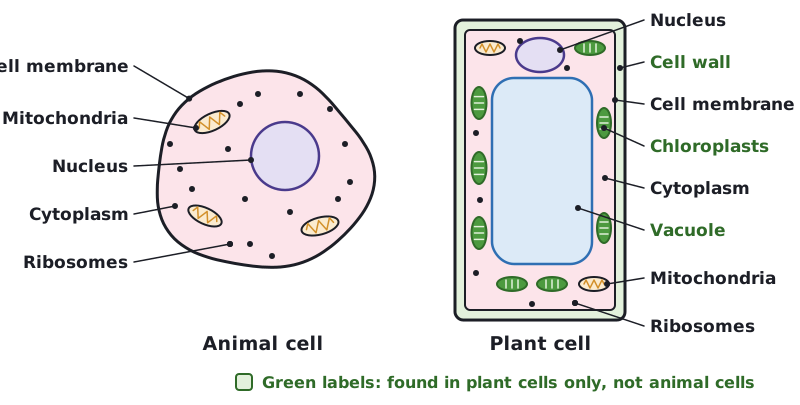 (opens full size in a new tab)
Say the cell membrane controls what enters and leaves the cell, and that mitochondria release energy by respiration. Never write that the membrane 'holds the cell together' or that mitochondria 'make energy'.
Written and checked against the Edexcel GCSE Combined Science (1SC0) specification · Updated October 2026