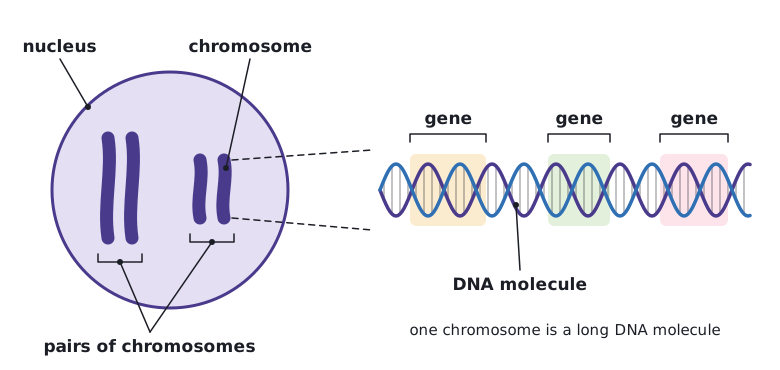
Chromosomes are structures in the nucleus of a cell, made of DNA molecules. Each chromosome carries a large number of genes, and in body cells the chromosomes are normally found in pairs. Keep the order straight: a nucleus contains chromosomes, each chromosome is a long DNA molecule, and each chromosome carries many genes.
The nucleus of a cell contains chromosomes made of DNA molecules. Each chromosome carries a large number of genes. In body cells the chromosomes are normally found in pairs.
Keep the order straight: a nucleus contains chromosomes, a chromosome is a long DNA molecule, and a chromosome carries many genes.
Written and checked against the AQA GCSE Biology (8461) specification · Updated October 2026
Frequently asked questions
What are the stages of mitosis?
For AQA GCSE you need the three overall stages of the cell cycle, not the separate phases of mitosis. First the cell grows, makes more sub-cellular structures and replicates its DNA. Then, in mitosis, one set of chromosomes is pulled to each end of the cell and the nucleus divides. Finally the cytoplasm and cell membranes divide.
Why is mitosis important?
Mitosis is important for the growth and development of multicellular organisms, because it produces new cells that are genetically identical to the parent cell. In mature animals, cell division is mainly restricted to repair and replacement, for example when new skin cells heal a cut. It also happens as root and shoot tips lengthen.
Why are stem cells useful in medicine?
Stem cells are useful because they are undifferentiated and can differentiate into other types of cell. Treatment with stem cells may be able to help conditions such as diabetes and paralysis. In therapeutic cloning, an embryo with the same genes as the patient is produced, so its stem cells are not rejected by the patient's body.

 (opens full size in a new tab)