
Animal and plant cellsSpec 4.1.1.2
In short
Most animal cells have a nucleus, cytoplasm, a cell membrane, mitochondria and ribosomes. Plant cells have these too, and often also have chloroplasts, which absorb light for photosynthesis, and a permanent vacuole filled with cell sap. Plant and algal cells also have a cell wall made of cellulose, which strengthens the cell.
Most animal cells have: a nucleus, cytoplasm, a cell membrane, mitochondria and ribosomes. In addition, plant cells often have: chloroplasts and a permanent vacuole filled with cell sap. Plant and algal cells also have a cell wall made of cellulose, which strengthens the cell.
| Structure | Function | Animal cell | Plant cell | Bacterial cell |
|---|---|---|---|---|
| Nucleus | Contains the genetic material (DNA) and controls the activities of the cell | Yes | Yes | No |
| Cytoplasm | Where most chemical reactions happen | Yes | Yes | Yes |
| Cell membrane | Controls the movement of substances into and out of the cell | Yes | Yes | Yes |
| Mitochondria | Where aerobic respiration takes place, releasing energy for the cell | Yes | Yes | No |
| Ribosomes | Where proteins are made (protein synthesis) | Yes | Yes | Yes |
| Cell wall | Strengthens the cell; made of cellulose in plant and algal cells | No | Yes | Yes (not cellulose) |
| Chloroplasts | Contain chlorophyll, which absorbs light energy for photosynthesis | No | Yes (often) | No |
| Permanent vacuole | Filled with cell sap; helps keep the cell firm | No | Yes | No |
| Plasmid | Small ring of extra DNA | No | No | Possibly |
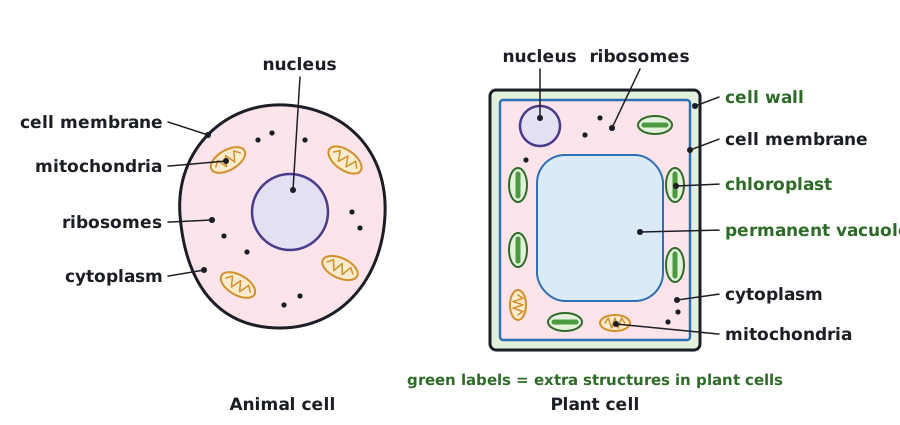 (opens full size in a new tab)
When asked to explain how a structure is related to its function, name the structure, state what it does, then link that to the job of the cell. Chloroplasts absorb light for photosynthesis, so they are found in cells that make food.
Estimating size and area
You should be able to use estimations to judge the relative size or area of sub-cellular structures. Round the measurements to easy numbers and compare them. Use an estimate when you only need to know roughly how much bigger one structure is than another, or to check that a calculated answer is sensible.
Estimating relative size
In a micrograph, a cell is 62 mm across and its nucleus is 19 mm across. Estimate how many times wider the cell is than the nucleus.
- Round the numbers: 62 mm is about 60 mm and 19 mm is about 20 mm.
- Divide: 60 ÷ 20 = 3.
Answer: The cell is roughly 3 times wider than the nucleus.
Written and checked against the AQA GCSE Biology (8461) specification · Updated October 2026