
Parts of a control systemSpec 4.5.1
In short
A control system keeps a condition in the body at its optimum level using three types of component. Receptors are cells that detect stimuli. Coordination centres, such as the brain, the spinal cord and the pancreas, receive and process the information. Effectors are muscles or glands that bring about responses which restore optimum levels.
All control systems include three types of component.
| Component | What it does | Examples |
|---|---|---|
| Receptors | Cells that detect stimuli (changes in the environment) | Temperature receptors in the skin |
| Coordination centres | Receive and process information from receptors | The brain, the spinal cord and the pancreas |
| Effectors | Muscles or glands that bring about responses which restore optimum levels | A muscle that contracts; a gland that secretes a hormone |
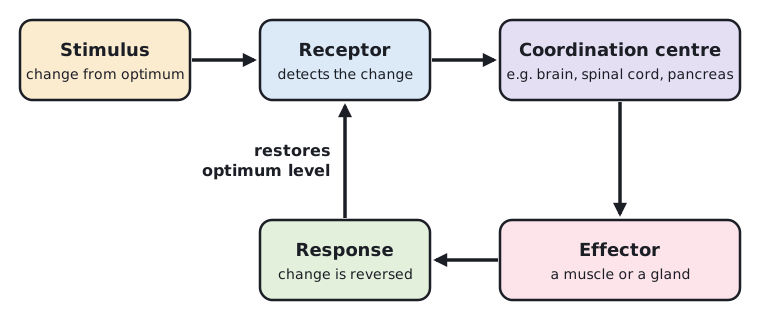
The sequence is: stimulus, receptor, coordination centre, effector, response. The response restores the optimum level, which the receptors then detect again.
 (opens full size in a new tab)
Effectors are muscles or glands only. Do not write that the brain or a receptor is an effector.
Quick check
Define homeostasis.
Show answer
The regulation of the internal conditions of a cell or organism to maintain optimum conditions for function, in response to internal and external changes.
Name three things controlled by homeostasis in the human body.
Show answer
Blood glucose concentration, body temperature and water levels.
What do receptors do?
Show answer
They detect stimuli (changes in the environment).
Name the two types of effector.
Show answer
Muscles and glands.
Written and checked against the AQA GCSE Biology (8461) specification · Updated October 2026