
EvolutionSpec 4.6.2.2
In short
Evolution is a change in the inherited characteristics of a population over time through a process of natural selection, which may result in the formation of a new species. Individuals best suited to their environment are more likely to survive, breed and pass on their alleles. Populations that can no longer interbreed to produce fertile offspring are separate species.
- Evolution
- A change in the inherited characteristics of a population over time through a process of natural selection, which may result in the formation of a new species.
The theory of evolution by natural selection states that all species of living things have evolved from simple life forms that first developed more than three billion years ago.
How natural selection works
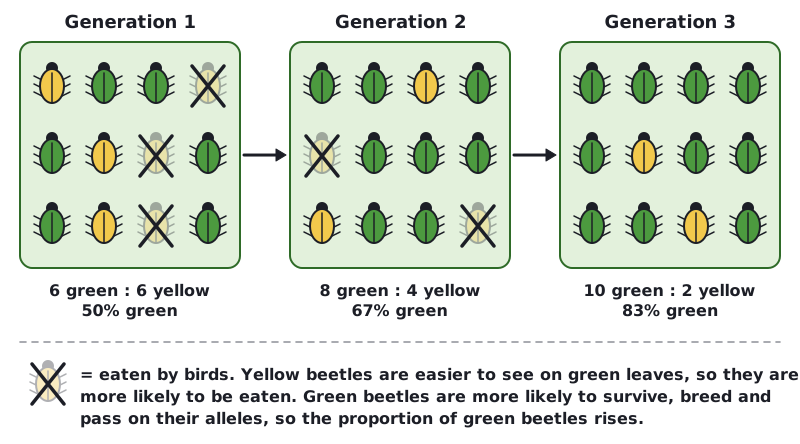
- Individuals in a population show variation in their phenotypes, caused by differences in their genes.
- The environment puts pressure on the population. For example, there may be predators, disease or competition for food.
- Individuals with phenotypes best suited to their environment are more likely to survive and breed.
- They pass on the alleles for the useful characteristic to their offspring.
- Over many generations, a greater proportion of the population has the characteristic.
New species
If two populations of one species become so different in phenotype that they can no longer interbreed to produce fertile offspring, they have formed two new species.
Individuals do not 'adapt' or 'evolve' during their lives. Populations evolve, because the better-suited variants survive and reproduce. Do not write that organisms 'need' a characteristic so they develop it.
 (opens full size in a new tab)
Written and checked against the AQA GCSE Biology (8461) specification · Updated October 2026