
Book a tutor

Speciation

Inheritance, variation and evolution · The development of understanding of genetics and evolution · note 2 of 7

Spec 4.6.3.2
Triple only (what this means)Triple only: only in Triple Biology. Combined Science students can skip it. What the labels mean
Download all The development of understanding of genetics and evolution notes (PDF)Download all notes (PDF)6 pages

SpeciationSpec 4.6.3.2

In short

Speciation is the formation of new species. A population becomes isolated, for example by a geographical barrier, so the groups cannot interbreed. Mutations cause genetic variation, and natural selection acts differently in each environment over many generations. Eventually the populations are so different in phenotype that they can no longer interbreed to produce fertile offspring, forming two new species.

Alfred Russel Wallace independently proposed the theory of evolution by natural selection. He published joint writings with Darwin in 1858, which prompted Darwin to publish On the Origin of Species (1859) the following year.

Wallace worked worldwide gathering evidence for evolutionary theory. He is best known for his work on warning colouration in animals and his theory of speciation. More evidence over time has led to our current understanding of speciation.

The work of Darwin and Wallace had a big impact on biology. It gave a single explanation for how species change over time and how new species form, and it led to scientists collecting evidence to test the theory.

Steps that give rise to new species

  1. A population of one species becomes isolated (for example by a geographical barrier), so the two populations cannot interbreed.
  2. There is genetic variation in each population, arising from mutations.
  3. The two populations live in different environments, so natural selection acts differently on them. Individuals with characteristics best suited to each environment survive and breed.
  4. The alleles for these characteristics are passed on, so the populations change over many generations.
  5. Eventually the populations are so different in phenotype that they can no longer interbreed to produce fertile offspring. They are now two new species.
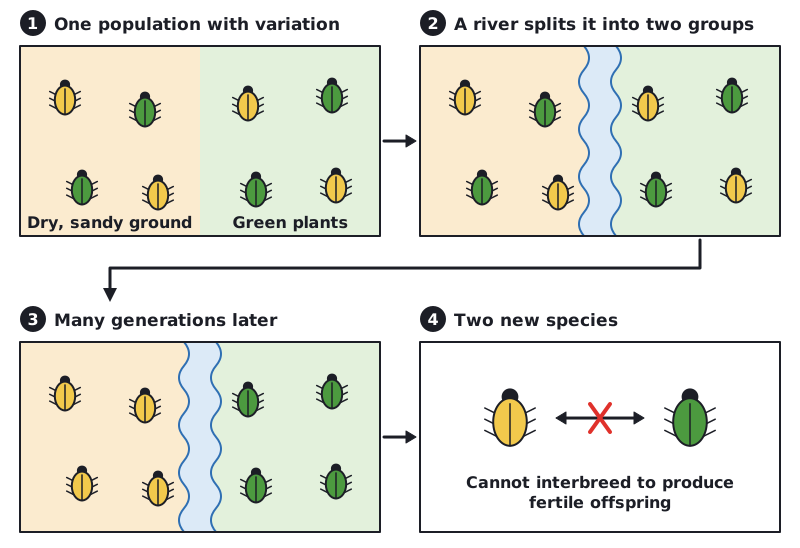
Four panels showing speciation: one varied beetle population, a river splitting it into two groups on sandy ground and among green plants, yellow beetles selected on the sandy side and green beetles on the plant side over many generations, and finally two new species that cannot interbreed to produce fertile offspring. (opens full size in a new tab)
Isolation plus different natural selection on each side leads to two populations that can no longer interbreed to produce fertile offspring.

Written and checked against the AQA GCSE Biology (8461) specification · Updated October 2026

Frequently asked questions

Why was the theory of evolution only gradually accepted?

Triple only The theory of evolution by natural selection was only gradually accepted for three reasons. It challenged the idea that God made all the animals and plants that live on Earth, there was insufficient evidence at the time to convince many scientists, and the mechanism of inheritance and variation was not known until 50 years after the theory was published.

What is the evidence for evolution?

The evidence for evolution includes the fossil record, which shows how much or how little organisms have changed as life developed on Earth, the discovery that characteristics are passed on to offspring in genes, and antibiotic resistance in bacteria, which shows natural selection happening in a short time. This is why the theory is now widely accepted.

How are fossils formed?

Fossils form in three ways: from parts of organisms that have not decayed because one or more of the conditions needed for decay are absent, from parts that are replaced by minerals as they decay, or as preserved traces such as footprints, burrows and rootlet traces. Fossils are found in rocks and show how organisms have changed.

All 5 questions on The development of understanding of genetics and evolution