
Book a tutor

Role of biotechnology

Ecology · Food production · note 4 of 4

Spec 4.7.5.4
Triple only (what this means)Triple only: only in Triple Biology. Combined Science students can skip it. What the labels mean
Download all Food production notes (PDF)Download all notes (PDF)4 pages

Role of biotechnologySpec 4.7.5.4

In short

Biotechnology, including genetic modification and culturing large quantities of microorganisms for food, can help feed the growing human population. The fungus Fusarium is grown on glucose syrup in aerobic conditions to produce mycoprotein, a protein-rich food suitable for vegetarians. Genetically modified bacteria produce human insulin, and GM crops such as golden rice can improve nutritional value.

Biotechnological and agricultural solutions, including genetic modification, can help meet the demands of the growing human population. Modern biotechnology techniques enable large quantities of microorganisms to be cultured for food.

Mycoprotein

The fungus Fusarium is useful for producing mycoprotein, a protein-rich food suitable for vegetarians.

  1. The fungus is grown on glucose syrup.
  2. It is grown in aerobic conditions (with oxygen).
  3. The biomass is harvested and purified.

Genetically modified organisms

A genetically modified bacterium produces human insulin. When harvested and purified this is used to treat people with diabetes.

GM crops could provide more food or food with an improved nutritional value, such as golden rice.
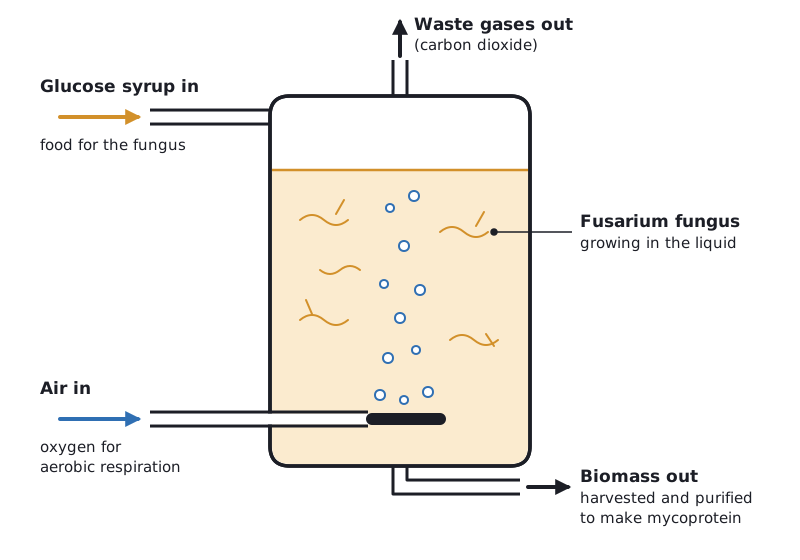
A fermenter with glucose syrup going in at the top as food for the fungus, air going in at the bottom to give oxygen for aerobic respiration, waste gases (carbon dioxide) leaving at the top, Fusarium fungus growing in the liquid, and biomass leaving at the bottom to be harvested and purified to make mycoprotein. (opens full size in a new tab)
Fusarium is grown in a fermenter on glucose syrup in aerobic conditions, then the biomass is harvested and purified to make mycoprotein.
Exam tip:

Link each product to its use: mycoprotein as a protein source for vegetarians, insulin to treat diabetes, and golden rice to improve nutrition.

Quick check

  1. Define food security.

    Show answer

    Having enough food to feed a population.

  2. Why does limiting the movement of food animals increase efficiency of food production?

    Show answer

    Less energy is transferred to the environment, so more goes into growth.

  3. Give two ways to keep fish stocks sustainable.

    Show answer

    Control of net size and fishing quotas.

  4. What is mycoprotein and what is it grown on?

    Show answer

    A protein-rich food made from the fungus Fusarium, grown on glucose syrup in aerobic conditions.

  5. What is produced by a genetically modified bacterium to treat diabetes?

    Show answer

    Human insulin.

Written and checked against the AQA GCSE Biology (8461) specification · Updated October 2026

Frequently asked questions

What threatens food security?

Food security, having enough food to feed a population, is threatened by an increasing birth rate, changing diets in developed countries that mean scarce food is transported around the world, new pests and pathogens, environmental changes such as rains failing, the cost of agricultural inputs, and conflicts that affect the availability of water or food.

How does intensive farming increase food production?

Intensive farming increases the efficiency of food production by restricting energy transfer from food animals to the environment. The animals' movement is limited and the temperature of their surroundings is controlled, so they transfer less energy to their surroundings and more of the energy from their food is used for growth. Some are also fed high protein foods.

How can fishing be made sustainable?

Fishing can be made sustainable by controlling net size and by fishing quotas. A larger mesh lets small, young fish escape, so they survive, grow and breed. Quotas limit how much fish can be caught, so enough fish are left to breed and stocks recover. Both keep fish stocks at a level where breeding continues.

All 4 questions on Food production

Finished food production? Test yourself:Exam questionsFlashcards