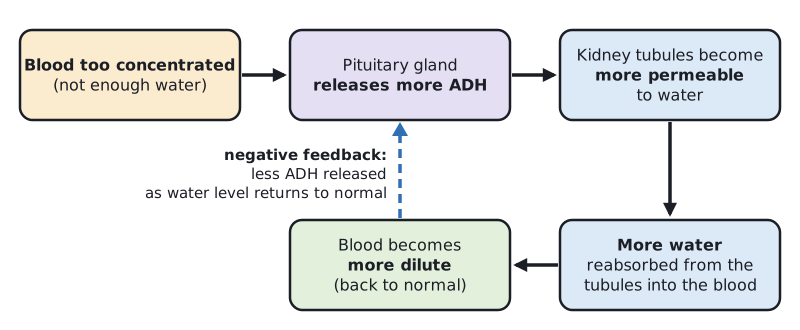
ADH is a hormone released by the pituitary gland when the blood is too concentrated. It acts on the kidney tubules, making them more permeable to water, so more water is reabsorbed into the blood and a small volume of concentrated urine is produced. This is negative feedback: when the water level returns to normal, less ADH is released.
The water level in the body is controlled by the hormone ADH, which acts on the kidney tubules. ADH is released by the pituitary gland when the blood is too concentrated. It causes more water to be reabsorbed back into the blood from the kidney tubules. It does this by making the kidney tubules more permeable to water.
Blood too concentrated (not enough water)
Blood too dilute (too much water)
ADH released by pituitary
More
Less
Permeability of kidney tubules to water
Increases
Decreases
Water reabsorbed into the blood
More
Less
Urine
Small volume, concentrated
Large volume, dilute
This is controlled by negative feedback: when the water level returns to normal, less ADH is released.
Always say ADH changes the permeability of the kidney tubules. Do not just say it ‘makes the kidney hold on to water’.
Written and checked against the AQA GCSE Biology (8461) specification · Updated October 2026
Frequently asked questions
What does insulin do to blood sugar?
Insulin lowers blood sugar (blood glucose concentration). The pancreas produces insulin when blood glucose is too high, for example after a meal. Insulin causes glucose to move from the blood into the cells, and in liver and muscle cells excess glucose is converted to glycogen for storage. Blood glucose then falls back to the normal level.
What is the difference between insulin and glucagon?
Higher tier Insulin lowers blood glucose and glucagon raises it. Both are made by the pancreas. Insulin is released when blood glucose is too high and makes glucose move from the blood into cells. Glucagon is released when it is too low and causes glycogen to be converted into glucose and released into the blood. They work in a negative feedback cycle.
Why are hormones called chemical messengers?
Hormones are called chemical messengers because they are chemicals secreted by glands directly into the bloodstream, which carries them to a target organ where they produce an effect. Compared with nerve impulses, hormones act more slowly but their effects last longer. They reach every part of the body but only affect their target organ.

 (opens full size in a new tab)