
Book a tutor

Producing monoclonal antibodies

Infection and response · Monoclonal antibodies · note 1 of 2

Spec 4.3.2.1
Triple only (what this means)Triple only: only in Triple Biology. Combined Science students can skip it. What the labels mean
Higher tier (what this means)Higher tier: only on the Higher tier papers. Foundation students can skip it. What the labels mean
Download all Monoclonal antibodies notes (PDF)Download all notes (PDF)4 pages

Producing monoclonal antibodiesSpec 4.3.2.1

In short

Monoclonal antibodies are antibodies produced from a single clone of cells, specific to one binding site on one protein antigen. Mouse lymphocytes are stimulated to make a particular antibody, then combined with a tumour cell to make a hybridoma cell, which can both divide and make the antibody. Single hybridoma cells are cloned, and the antibody is collected and purified.

Monoclonal antibodies are produced from a single clone of cells. The antibodies are specific to one binding site on one protein antigen, so they are able to target a specific chemical or specific cells in the body.

An antigen is a molecule that an antibody can bind to. Lymphocytes are a type of white blood cell that make antibodies.

Making monoclonal antibodies

  1. Mouse lymphocytes are stimulated to make a particular antibody.
  2. The lymphocytes are combined with a particular kind of tumour cell to make a hybridoma cell.
  3. The hybridoma cell can both divide and make the antibody.
  4. Single hybridoma cells are cloned to produce many identical cells that all produce the same antibody.
  5. A large amount of the antibody can be collected and purified.
Exam tip:

Say what each cell contributes. The lymphocyte makes the antibody. The tumour cell lets the hybridoma divide. The hybridoma does both.

Hybridoma cell
A cell made by combining a lymphocyte with a tumour cell. It can both divide and make the antibody.
Monoclonal antibody
An antibody produced from a single clone of cells, specific to one binding site on one protein antigen.
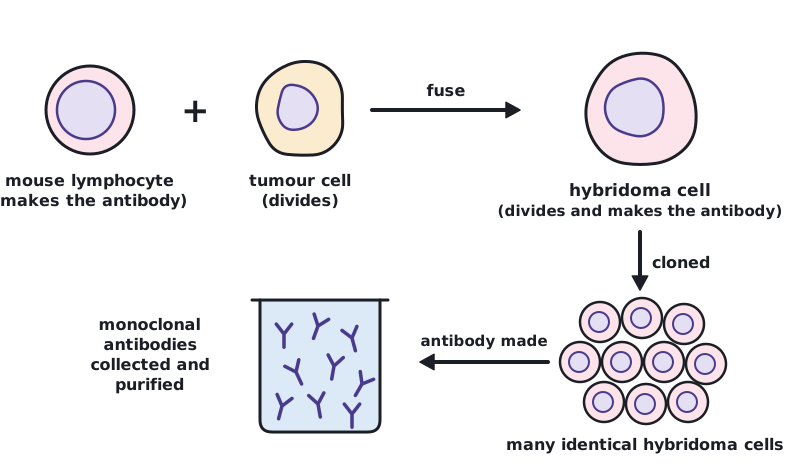
A mouse lymphocyte and a tumour cell fuse to form a hybridoma cell, which is cloned into many identical hybridoma cells that make antibodies, which are collected and purified. (opens full size in a new tab)
Making monoclonal antibodies: lymphocyte + tumour cell = hybridoma cell, which is cloned.

Written and checked against the AQA GCSE Biology (8461) specification · Updated October 2026

Frequently asked questions

What is a monoclonal antibody?

A monoclonal antibody is an antibody produced from a single clone of cells. It is specific to one binding site on one protein antigen, so it can target a specific chemical or specific cells in the body. Monoclonal antibodies are made by cloning hybridoma cells, which are formed by combining mouse lymphocytes with tumour cells.

How are monoclonal antibodies made?

Mouse lymphocytes are stimulated to make a particular antibody, then combined with a particular kind of tumour cell to make a hybridoma cell. The hybridoma cell can both divide and make the antibody. Single hybridoma cells are cloned to produce many identical cells that all make the same antibody, which is then collected and purified.

How are monoclonal antibodies used to treat cancer?

For cancer treatment, a monoclonal antibody is bound to a radioactive substance, a toxic drug or a chemical that stops cells growing and dividing. The antibody binds only to its specific antigen on the cancer cells, so it delivers the substance to those cells without harming other cells in the body.

All 5 questions on Monoclonal antibodies