
Book a tutor

Meiosis

Inheritance, variation and evolution · Reproduction · note 2 of 8

MeiosisSpec 4.6.1.2

In short

Meiosis is the type of cell division in the reproductive organs that forms gametes. The cell copies its genetic information, then divides twice to form four gametes, each with a single set of chromosomes, and all genetically different. Human gametes have 23 chromosomes instead of 46. Fertilisation restores the full number, and the new cell then divides by mitosis.

Cells in the reproductive organs divide by meiosis to form gametes. You need to be able to explain how meiosis halves the number of chromosomes in gametes and how fertilisation restores the full number.

  1. The cell copies its genetic information.
  2. The cell divides twice to form four gametes.
  3. Each gamete has a single set of chromosomes, so the chromosome number is halved.
  4. All the gametes are genetically different from each other.

Human body cells contain 23 pairs of chromosomes (46 in total). Each human gamete therefore has 23 chromosomes, one from each pair.

Gametes join at fertilisation to restore the normal number of chromosomes. The new cell divides by mitosis, so the number of cells increases. As the embryo develops, the cells differentiate.

Exam tip:

A full explanation has two parts: meiosis halves the chromosome number in the gametes, and fertilisation restores the full number. Knowledge of the stages of meiosis is not required.
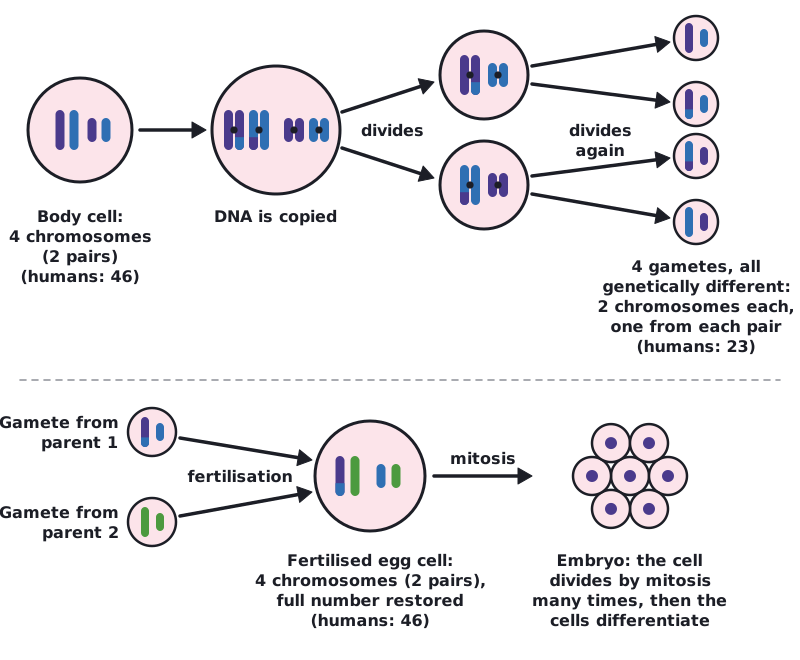
Flow diagram of a body cell with two pairs of chromosomes copying its DNA and dividing twice to make four genetically different gametes with one chromosome from each pair, then two gametes fusing at fertilisation to restore the full number before the cell divides by mitosis to form an embryo. (opens full size in a new tab)
Meiosis halves the chromosome number in gametes; fertilisation restores the full number, then mitosis builds the embryo.

Written and checked against the AQA GCSE Biology (8461) specification · Updated October 2026

Frequently asked questions

Why is meiosis important for sexual reproduction?

Meiosis is important because it halves the number of chromosomes in gametes, so that fertilisation restores the full number. Human gametes have 23 chromosomes, and when an egg and a sperm join, the new cell has 46. Meiosis also makes all the gametes genetically different, which leads to variation in the offspring.

What is a genotype and phenotype?

A genotype is the alleles present for a characteristic, such as Bb, and a phenotype is how the characteristic is expressed, such as black fur. The alleles in the genotype operate at a molecular level to develop the characteristics seen in the phenotype. A black mouse could be BB or Bb, but a brown mouse must be bb.

What is a Punnett square used for in genetics?

A Punnett square is used to show the possible combinations of alleles from the gametes of two parents. Each box is equally likely, so it predicts the probability and ratio of the offspring's genotypes and phenotypes. For example, crossing two Bb mice gives a 3 : 1 ratio of black to brown, so a 25% chance of a brown mouse.

All 5 questions on Reproduction