
How materials are cycledSpec 4.7.2.2
In short
The carbon cycle returns carbon from organisms to the atmosphere as carbon dioxide, to be used by plants in photosynthesis. Carbon passes along food chains, and plants, animals and decomposing microorganisms release carbon dioxide by respiration. The water cycle provides fresh water for plants and animals on land through evaporation and precipitation. Decomposers also return mineral ions to the soil.
Many different materials cycle through the abiotic and biotic components of an ecosystem. All materials in the living world are recycled to provide the building blocks for future organisms.
The carbon cycle
The carbon cycle returns carbon from organisms to the atmosphere as carbon dioxide to be used by plants in photosynthesis.
- Plants and algae take in carbon dioxide from the atmosphere for photosynthesis, and make glucose and other molecules.
- Carbon passes along food chains as animals eat the plants, and then other animals.
- Plants, animals and decomposing microorganisms release carbon dioxide into the atmosphere by respiration.
- When organisms die, microorganisms decompose them. They release carbon dioxide by respiration.
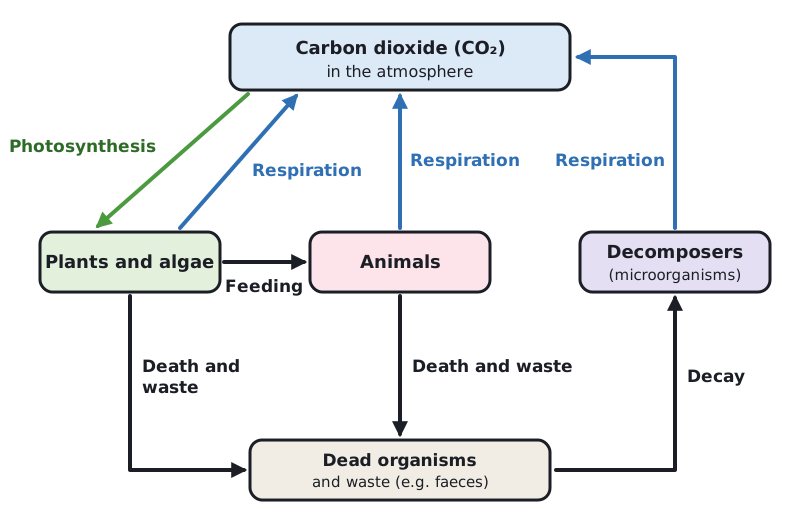 (opens full size in a new tab)
Carbon is important to living organisms because the main molecules they are built from, such as carbohydrates, proteins and fats, contain carbon. The cycle makes sure that carbon is available for new organisms.
The water cycle
The water cycle provides fresh water for plants and animals on land before draining into the seas. Water is continuously evaporated and precipitated.
- Water evaporates from the sea, from the land and from plants.
- The water vapour rises and cools, and condenses to form clouds.
- Water falls as precipitation, such as rain, hail and snow.
- The fresh water on land is used by plants and animals before draining into rivers and then the seas.
Water is important to living organisms because it is needed in cells, plants need it for photosynthesis, and land plants and animals need a supply of fresh water.
The role of microorganisms
Microorganisms that decompose dead plants, dead animals and waste have an important role in cycling materials through an ecosystem. They return carbon to the atmosphere as carbon dioxide (by respiration) and return mineral ions to the soil, where plants take them up.
You are not expected to study the nitrogen cycle. Learn the carbon and water cycles. In diagrams, name each arrow with the correct process: photosynthesis, respiration, feeding, decay, evaporation, condensation or precipitation.
Written and checked against the AQA GCSE Biology (8461) specification · Updated October 2026