
The brainSpec 4.5.2.2
In short
The brain controls complex behaviour. It is made of billions of interconnected neurones and has different regions that carry out different functions. The cerebral cortex is responsible for consciousness, intelligence, memory and language. The cerebellum coordinates muscular activity and balance. The medulla controls unconscious activities such as heart rate and breathing.
The brain controls complex behaviour. It is made of billions of interconnected neurones and has different regions that carry out different functions.
| Region | Function |
|---|---|
| Cerebral cortex | Consciousness, intelligence, memory and language |
| Cerebellum | Coordinates muscular activity and balance |
| Medulla | Controls unconscious activities such as heart rate and breathing |
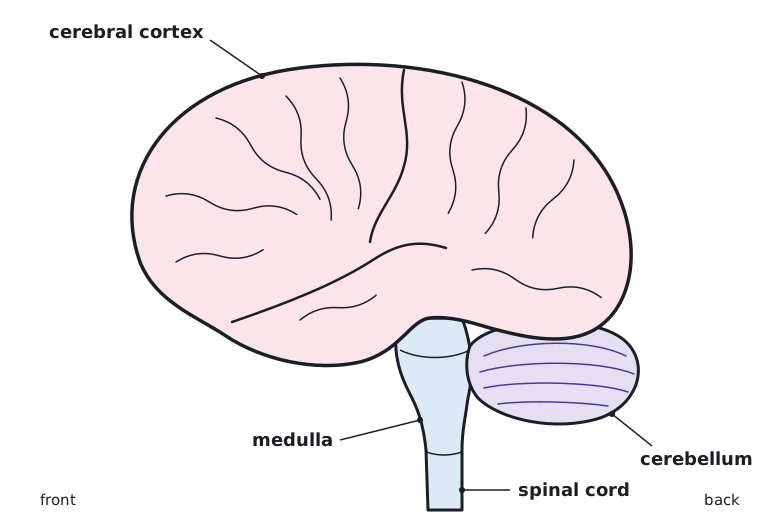 (opens full size in a new tab)
Higher tier (what this means)
Higher tier: only on the Higher tier papers. Foundation students can skip it. What the labels meanInvestigating the brain and treating brain disorders
Higher tier (what this means)
Higher tier: only on the Higher tier papers. Foundation students can skip it. What the labels meanNeuroscientists have mapped regions of the brain to particular functions in three main ways.
Higher tier (what this means)
Higher tier: only on the Higher tier papers. Foundation students can skip it. What the labels mean- Studying patients with brain damage and seeing which abilities are lost.
- Electrically stimulating different parts of the brain and seeing what happens.
- Using MRI scanning techniques.
Higher tier (what this means)
Higher tier: only on the Higher tier papers. Foundation students can skip it. What the labels meanThe complexity and delicacy of the brain makes investigating and treating brain disorders very difficult. It is made of billions of interconnected neurones, and its tissue is easily damaged during investigation or treatment. Any procedure on the brain or nervous system has benefits and risks that must be weighed up.
Higher tier (what this means)
Higher tier: only on the Higher tier papers. Foundation students can skip it. What the labels meanFor ‘difficulties’ questions, use the words complex and delicate, and link them to the risk of damaging the brain during investigation or treatment.
Written and checked against the AQA GCSE Biology (8461) specification · Updated October 2026