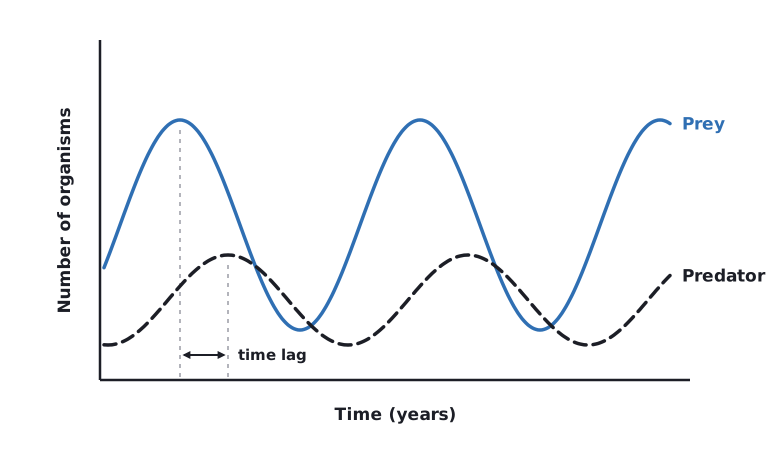
Predator-prey cycles are the regular rise and fall in the numbers of predators and prey in a stable community. When prey numbers are high, the predators have plenty of food, so their numbers rise. More prey are then eaten, so prey numbers fall, and with less food the predator numbers fall too. On a graph, the prey peak comes first.
In a stable community the numbers of predators and prey rise and fall in cycles.
Prey numbers are high, so there is plenty of food for the predators.
Predator numbers rise as they eat more prey and breed.
Prey numbers fall as more of them are eaten.
With less food, predator numbers fall.
Fewer predators means fewer prey are eaten, so prey numbers rise again.
On a graph, the prey peak comes first and the predator peak follows a short time later. The line that peaks first is the prey. Say that the predator numbers depend on the food supply.
Maths skill:
Interpret graphs used to model these cycles. Quote values from the graph, describe the pattern of both populations, and explain the link between them.
Written and checked against the AQA GCSE Biology (8461) specification · Updated October 2026
Frequently asked questions
How does carbon move through the carbon cycle?
Carbon moves through the carbon cycle when plants and algae take in carbon dioxide for photosynthesis, then carbon passes along food chains as animals feed. Plants, animals and microorganisms release carbon dioxide back into the atmosphere by respiration. When organisms die, microorganisms decompose them and release carbon dioxide by respiration, so carbon is available for new organisms.
How do you use a quadrat to estimate population size?
To estimate population size, place a quadrat at random positions, using random coordinates to avoid bias, and count the organisms of the species inside it each time. Repeat many times, for example 10 or more quadrats, and calculate the mean number per m². Then multiply the mean per m² by the total area of the habitat in m².
Why do predator and prey populations rise and fall in cycles?
Predator and prey numbers rise and fall in cycles because predator numbers depend on their food supply. When prey are plentiful, predators eat more and breed, so their numbers rise. More prey are then eaten, so prey numbers fall. With less food, predator numbers fall too, fewer prey are eaten, and prey numbers rise again.

 (opens full size in a new tab)