
Cell specialisationSpec 4.1.1.3
In short
A specialised cell has structures that suit it to a particular function. A sperm cell has a tail and many mitochondria to release energy for swimming. A nerve cell is long, with branched connections, to carry impulses. A root hair cell has a long hair-like projection, giving a large surface area to absorb water and mineral ions.
Cells may be specialised to carry out a particular function. You should be able to explain how the structure of different types of cell relate to their function in a tissue, an organ or organ system, or the whole organism, when you are given appropriate information.
| Cell | Function | How its structure helps |
|---|---|---|
| Sperm cell | Carries the male genetic information to the egg | Tail for swimming; many mitochondria to release the energy needed to swim; streamlined head; enzymes in the head to break into the egg; nucleus containing genetic information |
| Nerve cell | Carries electrical impulses around the body | Long (extended) so it can carry impulses over long distances; branched connections at the ends to connect with other nerve cells and organs |
| Muscle cell | Contracts (shortens) to cause movement | Contains protein fibres that can slide to make the cell shorten; many mitochondria to release energy for contraction; may store glycogen as an energy source |
| Root hair cell | Absorbs water and mineral ions from the soil | Long hair-like projection gives a large surface area; thin cell wall; many mitochondria to release energy for active transport of mineral ions |
| Xylem cell | Carries water and mineral ions up the plant | Joined end to end to form a hollow tube with no end walls and no cytoplasm; walls strengthened (by lignin) |
| Phloem cell | Carries dissolved sugars around the plant | Elongated cells joined end to end to form tubes; pores in the end walls let cell sap containing dissolved sugars move from one phloem cell to the next |
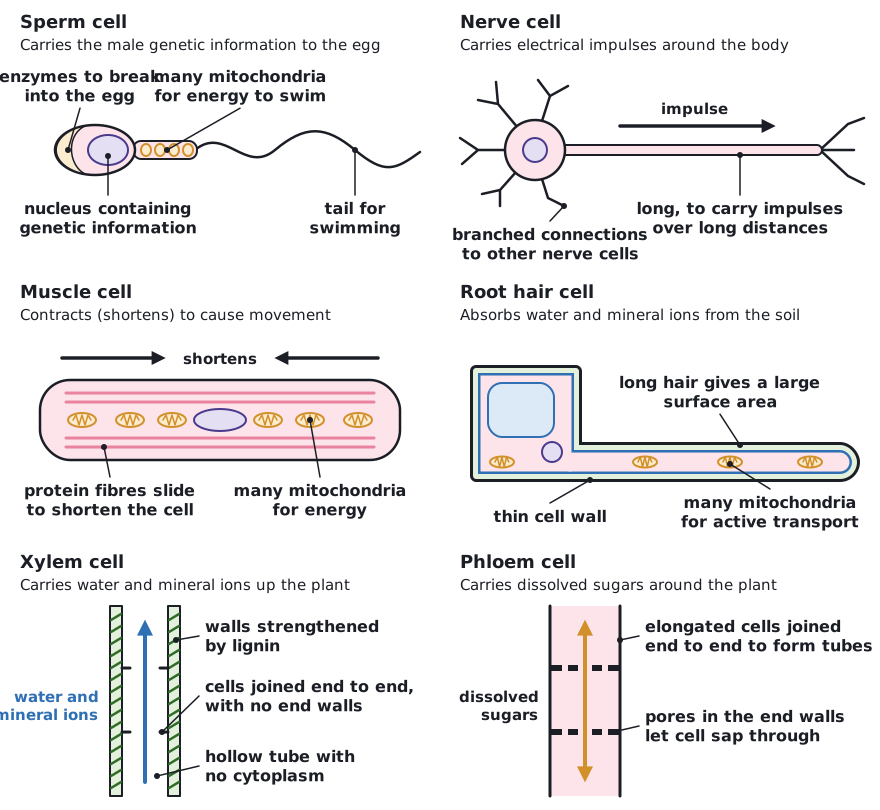 (opens full size in a new tab)
For an unfamiliar cell, pick out each feature in the information, say what it does and link it to the cell's function. 'Many mitochondria' means more energy released by respiration.
Written and checked against the AQA GCSE Biology (8461) specification · Updated October 2026