
Detection and identification of plant diseasesSpec 4.3.3.1
In short
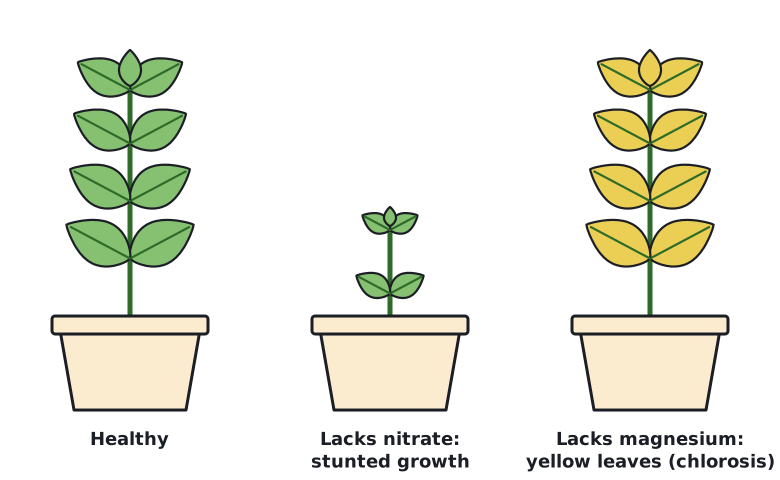
Plant diseases are detected by signs such as stunted growth, spots on leaves, areas of decay, growths, malformed stems or leaves, discolouration and pests. They are identified using a gardening manual or website, laboratory tests, or testing kits containing monoclonal antibodies. Nitrate deficiency causes stunted growth, and magnesium deficiency causes chlorosis, which makes leaves yellow.
Higher tier (what this means)
Higher tier: only on the Higher tier papers. Foundation students can skip it. What the labels meanDetecting plant disease
Higher tier (what this means)
Higher tier: only on the Higher tier papers. Foundation students can skip it. What the labels meanPlant diseases can be detected by:
Higher tier (what this means)
Higher tier: only on the Higher tier papers. Foundation students can skip it. What the labels mean- stunted growth
- spots on leaves
- areas of decay (rot)
- growths
- malformed stems or leaves
- discolouration
- the presence of pests.
Higher tier (what this means)
Higher tier: only on the Higher tier papers. Foundation students can skip it. What the labels meanIdentifying plant disease
Higher tier (what this means)
Higher tier: only on the Higher tier papers. Foundation students can skip it. What the labels meanIdentification can be made by:
Higher tier (what this means)
Higher tier: only on the Higher tier papers. Foundation students can skip it. What the labels mean- reference to a gardening manual or website
- taking infected plants to a laboratory to identify the pathogen
- using testing kits that contain monoclonal antibodies.
Higher tier (what this means)
Higher tier: only on the Higher tier papers. Foundation students can skip it. What the labels meanA testing kit works because the monoclonal antibody binds only to an antigen from the specific pathogen. Say this to explain why the result is reliable.
Plant pathogens and pests
Plants can be infected by a range of viral, bacterial and fungal pathogens as well as by insects. Your knowledge of plant diseases is restricted to:
- tobacco mosaic virus as a viral disease
- black spot as a fungal disease
- aphids as insects. Aphids are insect pests that feed on plants.
Ion deficiency conditions
Plants can be damaged by a range of ion deficiency conditions.
| Ion missing | Why the plant needs it | Effect on the plant |
|---|---|---|
| Nitrate | Needed for protein synthesis, and therefore growth | Stunted growth |
| Magnesium | Needed to make chlorophyll | Chlorosis (yellow leaves) |
Knowing about ion deficiencies allows horticulturists to provide the optimum conditions for plants. Your knowledge of ions is limited to nitrate and magnesium.
Chlorosis is a lack of chlorophyll, which makes leaves yellow. In the exam, link chlorosis to magnesium and stunted growth to nitrate.
 (opens full size in a new tab)
Written and checked against the AQA GCSE Biology (8461) specification · Updated October 2026