
Book a tutor

The skin and the hypothalamus

Animal coordination, control and homeostasis · Homeostasis and temperature control · note 3 of 4

Spec 7.11B
Triple only (what this means)Triple only: only in Triple Biology. Combined Science students can skip it. What the labels mean
Download all Homeostasis and temperature control notes (PDF)Download all notes (PDF)4 pages

The skin and the hypothalamusSpec 7.11B

In short

The hypothalamus in the brain is the control centre for body temperature. It monitors the temperature of the blood and receives impulses from temperature receptors in the dermis of the skin. It then sends nerve impulses to effectors such as the sweat glands, muscles and blood vessels. Sweat reaches the skin surface through pores in the epidermis.

The skin has two main layers, the epidermis and the dermis. The hypothalamus in the brain is the control centre for temperature.

PartRole in thermoregulation
EpidermisThe thin outer layer of the skin. Sweat reaches the skin surface through pores in the epidermis, and heat is lost from the surface
DermisThe layer below the epidermis. It contains the sweat glands, blood vessels that supply the skin, and temperature receptors that detect changes in skin temperature
HypothalamusMonitors the temperature of the blood and receives impulses from temperature receptors in the skin. It coordinates the response by sending nerve impulses to the effectors, such as the sweat glands, muscles and blood vessels
Exam tip:

Link each part to a job. Say what the hypothalamus detects and what it then triggers, not just that it ‘controls’ temperature.
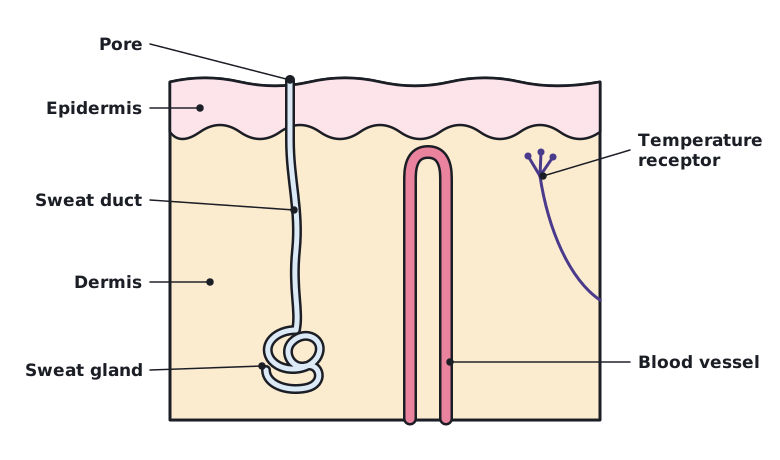
Cross-section of skin showing the epidermis on top of the dermis, a coiled sweat gland in the dermis with a sweat duct leading to a pore at the surface, a blood vessel loop and a temperature receptor. (opens full size in a new tab)
The structures in the skin involved in thermoregulation.

Written and checked against the Edexcel GCSE Biology (1BI0) specification · Updated October 2026

Frequently asked questions

Why is homeostasis important?

Homeostasis is important because enzymes and cells work best in a narrow range of conditions. If blood glucose concentration, body temperature or the water content of the blood drift too far, reactions in cells slow down or stop. The body responds to changes and brings each condition back to a set level, often using negative feedback.

How is body temperature regulated?

Triple only Body temperature is regulated by the hypothalamus in the brain, which monitors the temperature of the blood and receives impulses from temperature receptors in the skin. When the body is too hot, sweat glands release sweat, which evaporates and cools the skin. When it is too cold, muscles shiver, and the extra respiration transfers energy as heat.

What is the difference between vasodilation and vasoconstriction?

Triple onlyHigher tier Vasodilation is the widening of the blood vessels supplying the skin surface when the body is too hot, so more blood flows near the surface and more heat is lost. Vasoconstriction is the narrowing of these vessels when the body is too cold, so less blood flows near the surface and less heat is lost.

All 4 questions on Homeostasis and temperature control