Eutrophication happens when too many nutrients, such as nitrates from fertilisers or sewage, run off into lakes and rivers. Algae grow quickly and block light, so plants and algae lower down die. Decomposer bacteria feed on the dead material and use up the oxygen in the water for aerobic respiration, so fish and other aquatic animals die.
Eutrophication happens when too many nutrients, such as nitrates from fertilisers or sewage, run off into lakes and rivers.
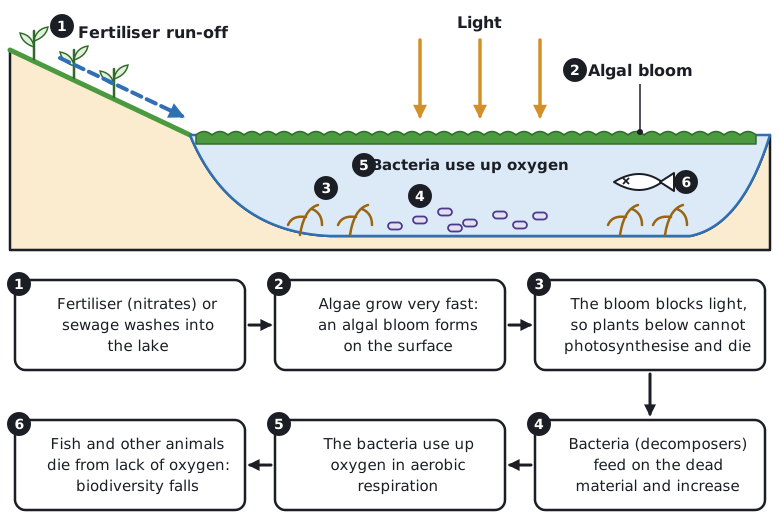
Nitrates from fertilisers or sewage are washed into the water.
Algae in the water grow very quickly because of the extra nutrients, forming a layer on the surface (an algal bloom).
The layer blocks light, so plants and algae lower down cannot photosynthesise and die.
Bacteria (decomposers) feed on the dead material and their numbers increase.
The bacteria use up oxygen in the water for aerobic respiration.
Fish and other aquatic animals die from lack of oxygen, so biodiversity falls.
Common mistake:
The fish do not die because the algae poison them. The main cause is the decomposers feeding on the dead plants and algae, which use up the oxygen.
Written and checked against the Edexcel GCSE Biology (1BI0) specification · Updated October 2026
Frequently asked questions
What is eutrophication and what causes it?
Eutrophication is caused by too many nutrients, such as nitrates from fertilisers or sewage, running into lakes and rivers. Algae grow quickly and block light, so plants below die. Decomposer bacteria feed on the dead material and use up the oxygen for aerobic respiration, so fish and other aquatic animals die and biodiversity falls.
Why is biodiversity important to ecosystems?
Biodiversity is important because ecosystems with high biodiversity are more stable. Species depend on each other, so the loss of one is less likely to cause others to fail. Biodiversity also gives humans food, materials and medicines, and species help maintain the conditions we depend on, such as pollination of crops and cycling of materials.
What are the advantages and disadvantages of fish farming?
Fish farming provides a reliable food supply, reduces overfishing of wild stocks, and lets conditions be controlled so fish grow quickly. However, waste and uneaten food pollute water and can cause eutrophication, disease and parasites can spread to wild fish, and escaped fish may compete or interbreed with wild fish, reducing their genetic variety.

 (opens full size in a new tab)