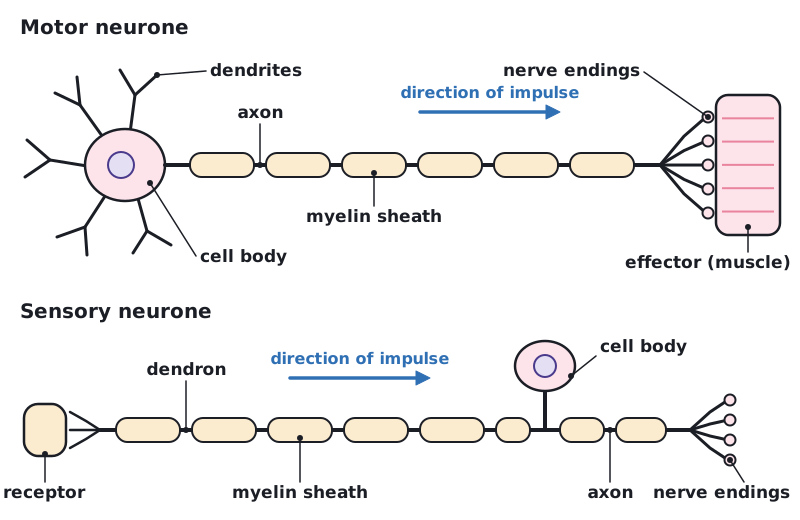
Neurones are cells specialised to carry electrical impulses quickly over long distances. The axon is a long fibre that carries impulses away from the cell body, and the dendron carries impulses towards it. The myelin sheath is a fatty layer that insulates the neurone and speeds up the transmission of impulses.
Neurones are specialised to carry electrical impulses quickly over long distances.
Axon
A long fibre that carries electrical impulses away from the cell body.
Dendron
A fibre that carries electrical impulses towards the cell body.
Myelin sheath
A fatty layer around the neurone that insulates it and speeds up the transmission of impulses.
Link the structure to its function. The myelin sheath is an insulator, which makes the impulse travel faster.
Written and checked against the Edexcel GCSE Biology (1BI0) specification · Updated October 2026
Frequently asked questions
What is a reflex arc?
A reflex arc is the pathway followed in a reflex, a fast, automatic response that does not involve conscious thought. A receptor detects a stimulus, a sensory neurone carries impulses to the CNS, a relay neurone passes them to a motor neurone, and the motor neurone carries them to an effector, which responds.
Why are reflexes faster than normal responses?
Reflexes are faster because the impulses do not have to travel to the conscious part of the brain before the response. The pathway goes from the sensory neurone through a relay neurone in the CNS straight to the motor neurone, so the effector responds automatically. This speed protects the body from harm.
How does a nerve impulse cross the synapse?
A nerve impulse cannot cross the synapse as an electrical impulse. Instead, when it reaches the end of the first neurone, a chemical called a neurotransmitter is released into the gap. The neurotransmitter diffuses across and binds to receptors on the next neurone, which triggers a new electrical impulse in that neurone.

 (opens full size in a new tab)